

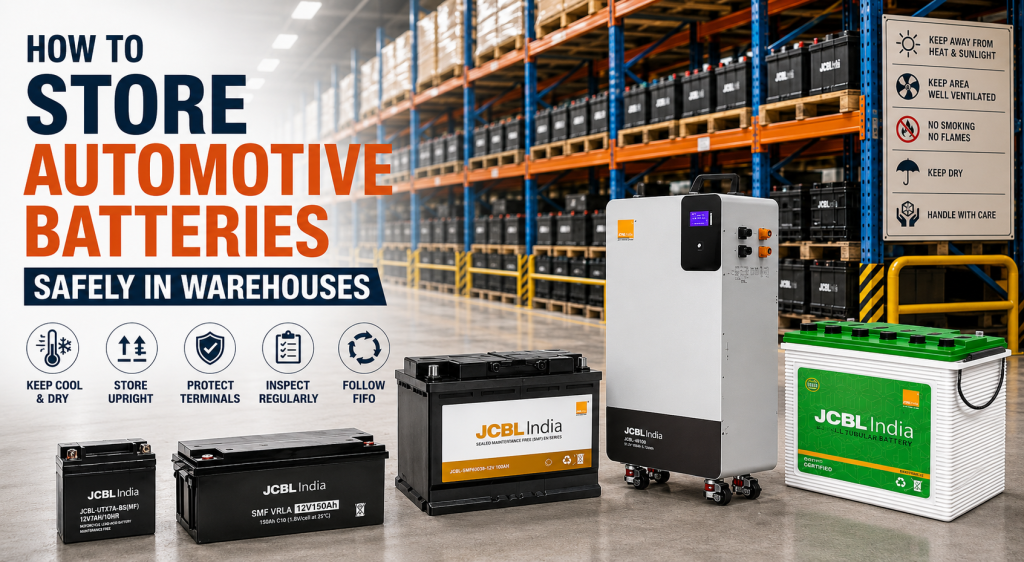
Automotive batteries require controlled storage conditions to maintain their performance, reliability, and shelf life before reaching the end user. For battery manufacturers, distributors, OEM suppliers, and exporters in India, proper warehouse management plays a critical role in preventing premature aging, inventory losses, and quality issues.
Improper storage can lead to self-discharge, corrosion, reduced battery efficiency, packaging damage, and increased warranty concerns. Following standardized battery storage practices helps businesses maintain product quality across domestic and international supply chains, including markets in the Middle East, Africa, and Southeast Asia.
This guide explains the key warehouse storage practices followed by automotive battery suppliers to protect inventory and ensure consistent battery performance.
Why Proper Automotive Battery Storage Matters
Battery quality is influenced not only by manufacturing processes but also by handling and storage conditions throughout the supply chain. A controlled warehouse environment helps maintain battery performance until installation.
Proper storage helps businesses:
- Preserve battery capacity and reliability.
- Reduce premature product deterioration.
- Minimize inventory-related losses.
- Improve stock rotation efficiency.
- Reduce warranty and replacement issues.
- Maintain consistent product quality for customers.
For automotive battery manufacturers and suppliers in India, effective warehouse storage practices are essential for maintaining quality standards during distribution and export operations.
10 Best Practices for Storing Automotive Batteries Safely in Warehouses
1. Maintain a Cool and Dry Storage Environment
Temperature and humidity directly affect battery performance during storage. Excessive heat can accelerate chemical reactions inside batteries and increase self-discharge rates, while moisture can contribute to corrosion and packaging damage.
Warehouses should maintain stable environmental conditions and avoid areas exposed to water leakage, high humidity, or sudden temperature changes.
2. Keep Batteries Away from Direct Sunlight and Heat Sources
Automotive batteries should not be stored near heat-generating equipment such as furnaces, heating systems, welding areas, or locations with prolonged sunlight exposure.
A shaded and temperature-controlled storage area helps protect battery materials and prevents unnecessary deterioration during extended storage periods.
3. Store Batteries in an Upright Position
Automotive batteries should generally be stored upright unless otherwise specified by the manufacturer.
Proper positioning helps:
- Maintain packaging stability.
- Reduce the risk of physical damage.
- Protect battery terminals.
- Improve warehouse organization.
Using suitable racks or pallets also reduces handling risks during storage and movement.
4. Ensure Proper Warehouse Ventilation
Adequate airflow is important, especially when storing flooded lead-acid batteries. Ventilation helps manage gases that may be released during charging or maintenance activities.
Battery storage areas should be designed with appropriate airflow while keeping products away from potential ignition sources.
5. Protect Battery Terminals from Corrosion and Damage
Battery terminals require protection throughout the storage period to prevent corrosion and accidental short circuits.
Recommended practices include:
- Keeping terminal covers installed where applicable.
- Preventing contact with metal objects.
- Maintaining a clean storage environment.
- Inspecting terminals periodically.
Clean and protected terminals help ensure batteries remain ready for installation.
6. Monitor Battery Charge During Long-Term Storage
Automotive batteries naturally lose charge when stored for extended periods. Regular monitoring helps prevent excessive discharge and supports better inventory quality.
For long-term storage:
- Check battery condition periodically.
- Monitor voltage levels according to manufacturer guidelines.
- Recharge batteries when recommended.
- Maintain storage records for inventory tracking.
Following proper charge management practices reduces the risk of receiving or supplying underperforming batteries.
7. Follow FIFO Inventory Management
The First In, First Out (FIFO) approach ensures older battery stock is dispatched before newer inventory.
FIFO helps businesses:
- Reduce prolonged storage periods.
- Maintain fresher inventory.
- Improve warehouse efficiency.
- Minimize aging-related performance concerns.
This practice is particularly important for automotive battery distributors and exporters managing large volumes of inventory.
8. Avoid Improper Battery Stacking
Incorrect stacking can damage battery casings, packaging, and terminals. Warehouses should always follow manufacturer-recommended stacking limits.
Best practices include:
- Using stable pallets and storage systems.
- Avoiding excessive weight on battery packages.
- Maintaining safe movement areas.
- Preventing unstable stacks.
Proper stacking protects both inventory and warehouse personnel.
9. Perform Regular Battery Inspections
Routine inspections help identify storage-related issues before they affect product quality.
Warehouse teams should check for:
- Leakage.
- Cracks or physical damage.
- Swelling or deformation.
- Terminal corrosion.
- Damaged packaging.
Any damaged batteries should be isolated and handled according to workplace safety procedures.
10. Train Warehouse Personnel on Battery Handling
Proper storage depends on trained employees who understand battery handling requirements.
Training should cover the following:
- Safe lifting techniques.
- Battery movement procedures.
- Personal protective equipment requirements.
- Inspection practices.
- Emergency handling procedures.
A trained workforce reduces safety risks and helps maintain product integrity.
Automotive Battery Storage Guidelines Based on Battery Type
Different battery technologies may require specific storage conditions.
- Lead-Acid Batteries: Lead-acid automotive batteries require careful charge monitoring during extended storage. Proper ventilation and periodic inspection help maintain battery condition.
- Maintenance-Free Batteries: Maintenance-free batteries require protection from extreme temperatures, moisture, and physical damage during warehouse storage.
- Lithium-Ion Automotive Batteries: Lithium-ion batteries require storage conditions defined by the manufacturer, including recommended temperature ranges and state-of-charge requirements. Specialized handling procedures may apply depending on battery design and application.
Always follow the battery manufacturer’s technical guidelines for specific storage requirements.
Recommended Warehouse Conditions for Automotive Batteries
| Storage Factor | Recommended Practice |
| Environment | Clean, dry, and controlled storage area |
| Temperature | Maintain manufacturer-recommended limits |
| Humidity | Avoid excessive moisture |
| Position | Store upright |
| Ventilation | Ensure adequate airflow |
| Sunlight | Avoid direct exposure |
| Inventory | Follow FIFO rotation |
| Inspection | Perform periodic condition checks |
| Maintenance | Follow manufacturer guidelines |
Common Automotive Battery Storage Mistakes to Avoid
Avoid these practices to protect battery inventory:
- Storing batteries near heat sources.
- Leaving batteries unused for extended periods without inspection.
- Ignoring FIFO inventory rotation.
- Allowing moisture or corrosion buildup.
- Overstacking battery cartons or pallets.
- Storing damaged batteries with good inventory.
- Skipping employee training.
Preventing these issues improves warehouse efficiency and reduces avoidable product losses.
Importance of Proper Battery Storage for Manufacturers and Exporters in India
For automotive battery manufacturers, suppliers, and exporters in India, warehouse storage is an important part of quality assurance. Batteries often travel long distances before reaching distributors, OEMs, and customers, making proper storage essential throughout the supply chain.
Effective storage practices help businesses:
- Maintain consistent product quality.
- Reduce inventory damage.
- Improve customer satisfaction.
- Support reliable domestic and export supply.
- Strengthen overall supply chain performance.
Companies supplying automotive batteries to global markets must maintain disciplined storage processes to ensure products meet customer expectations after transportation and distribution.
Industry Guidelines and Quality Considerations
Automotive battery storage procedures should be aligned with:
- Battery manufacturer recommendations.
- Workplace safety requirements.
- Applicable battery handling standards.
- Industry guidance from organizations such as Battery Council International (BCI), OSHA safety practices, and relevant IEC standards.
Following recognized guidelines helps businesses maintain safer warehouse operations and consistent product quality.
Conclusion
Safe automotive battery storage requires more than simply placing products in a warehouse. Maintaining suitable environmental conditions, protecting terminals, monitoring battery status, managing inventory effectively, and training warehouse teams all contribute to better battery reliability.
For automotive battery manufacturers, distributors, and exporters in India, adopting structured warehouse storage practices helps reduce losses, improve operational efficiency, and deliver dependable products to customers across domestic and international markets.
FAQs
Automotive batteries should be stored in a cool, dry, ventilated warehouse, away from direct sunlight and heat sources. They should remain upright, be inspected regularly, and follow FIFO inventory management.
Yes. Maintaining the manufacturer-recommended charge level helps reduce performance loss during storage and supports longer shelf life.
Inspection schedules depend on battery type and storage duration. Regular visual checks and condition monitoring are recommended for stored inventory.
FIFO ensures older batteries are dispatched first, reducing extended storage periods and helping maintain fresher inventory.
Batteries should only be stacked according to manufacturer recommendations. Improper stacking can damage packaging, terminals, and battery casings.