

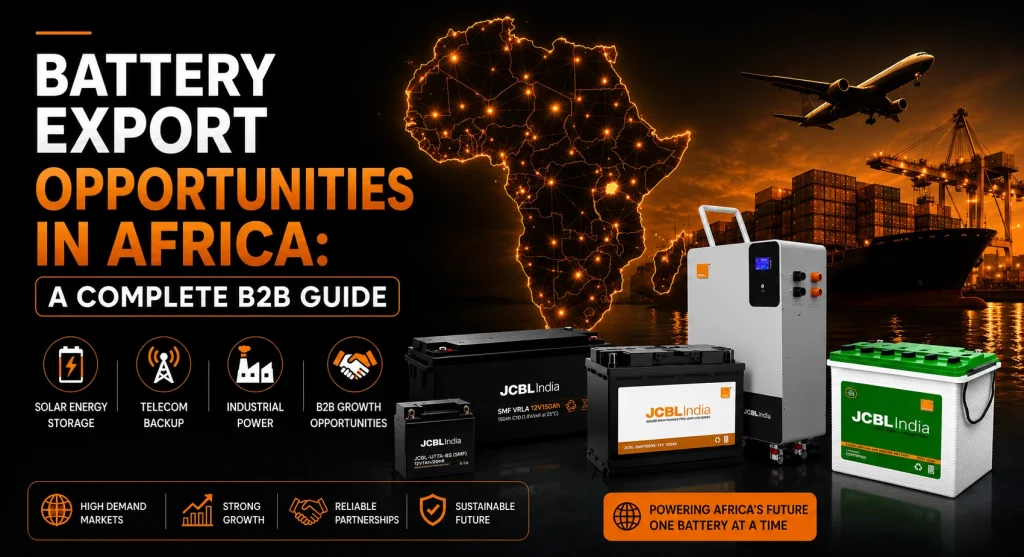
Africa is rapidly becoming one of the world’s most promising battery import markets as demand for solar energy storage, backup power systems, telecom infrastructure, and industrial electrification continues to grow across the continent. For battery manufacturers, OEM suppliers, and B2B exporters, Africa offers significant opportunities in lithium-ion batteries, inverter systems, telecom backup solutions, and industrial energy storage. This guide explores the fastest-growing battery segments, top import markets, key buyer channels, and strategic opportunities shaping Africa’s evolving battery industry.
Why Africa Is Becoming a Major Battery Import Market
Africa is becoming a major battery import market due to rising solar adoption, unreliable electricity infrastructure, telecom expansion, and growing demand for backup power and energy storage systems.
Nearly 600 million people across Africa still lack reliable electricity access, increasing demand for:
- Solar batteries
- Telecom backup systems
- Inverter batteries
- Industrial UPS batteries
- Battery energy storage systems (BESS)
At the same time, investments in renewable energy, telecom infrastructure, industrialization, and off-grid electrification are accelerating battery imports across the continent.
Africa’s battery market is projected to grow from approximately USD 2.52 billion in 2025 to nearly USD 4.85 billion by 2031.
| Growth Driver | Impact on Battery Demand |
| Solar expansion | Increases energy storage demand |
| Grid instability | Boosts backup battery adoption |
| Telecom infrastructure | Expands industrial battery usage |
| Off-grid electrification | Accelerates solar battery imports |
Unlike mature markets, Africa’s battery demand is highly decentralized, with the strongest growth in off-grid solar systems, telecom towers, SMEs, and distributed energy storage.
Highest-Growth Battery Export Opportunities in Africa
Solar lithium batteries, telecom backup batteries, inverter batteries, industrial ESS systems, and automotive batteries are among the fastest-growing battery export opportunities across Africa.
1. Solar Lithium Batteries
Demand for solar lithium batteries is rising rapidly due to off-grid solar expansion and renewable energy investments.
Key Markets
- Nigeria
- Kenya
- South Africa
Major Applications
- rooftop solar
- mini-grids
- rural electrification
2. Telecom Backup Batteries
Telecom expansion is increasing demand for industrial and lithium-ion backup batteries for mobile towers and communication infrastructure.
Key Markets
- Nigeria
- Ghana
- Kenya
- Tanzania
3. Inverter Batteries
Frequent power outages are driving strong demand for inverter batteries across residential and commercial sectors.
Key Markets
- Nigeria
- Ghana
- Ethiopia
4. Industrial Energy Storage Systems (ESS)
Industrial ESS demand is growing as factories, mining companies, and commercial facilities invest in backup power systems.
Key Markets
- South Africa
- Zambia
- Nigeria
- Morocco
5. Automotive Replacement Batteries
Automotive batteries remain a high-volume import category due to growing vehicle ownership and replacement demand.
Key Markets
- Nigeria
- South Africa
- Ghana
- Kenya
Top African Countries for Battery Export Opportunities
Nigeria, South Africa, Kenya, Ghana, and Ethiopia are among the most attractive battery export markets in Africa due to rising solar adoption, backup power demand, telecom expansion, and industrial growth.
| Country | Key Opportunity Areas | High-Demand Battery Types |
| Nigeria | Backup power, solar growth, telecom expansion | Inverter, lithium-ion, telecom batteries |
| South Africa | Energy storage, mining, and commercial solar | Industrial lithium-ion, ESS systems |
| Kenya | Off-grid solar and mini-grids | Solar lithium and deep-cycle batteries |
| Ghana | Commercial backup power demand | Inverter and UPS batteries |
| Ethiopia | Infrastructure and industrial growth | Energy storage and industrial batteries |
Market Insights
- Nigeria remains Africa’s largest battery opportunity market due to severe grid instability and rising demand for backup power systems.
- South Africa leads in advanced energy storage adoption, with strong demand for industrial lithium-ion and commercial ESS solutions.
- Kenya continues driving East Africa’s solar battery demand through off-grid and mini-grid expansion.
- Ghana is seeing rising imports of inverters and UPS batteries for commercial backup power.
- Ethiopia is emerging as a high-potential market due to rapid infrastructure development and industrialization.
Where B2B Exporters Can Find Battery Buyers in Africa
Battery exporters can enter African markets through distributors, solar EPC companies, telecom operators, industrial procurement networks, and renewable energy trade exhibitions.
1. Local Distributors
Local distributors help exporters expand through established dealer networks, regional logistics support, local market expertise, and after-sales service capabilities across multiple African markets.
2. Solar EPC Companies
Solar EPC firms regularly procure lithium-ion batteries, solar storage systems, and commercial ESS infrastructure for solar projects, mini-grids, and rural electrification programs.
3. Telecom Operators
Telecom companies require industrial batteries and backup power systems to support expanding mobile tower infrastructure and reduce dependence on diesel-powered energy solutions.
4. Trade Exhibitions and Energy Events
Energy expos and renewable energy exhibitions help exporters connect with distributors, project developers, procurement managers, and industrial buyers across African energy markets.
Exporters that build long-term partnerships with distributors and EPC companies generally achieve stronger market penetration and repeat business across African markets.
Key Challenges Battery Exporters Should Understand
The biggest challenges in exporting batteries to Africa include logistics costs, counterfeit competition, regulatory compliance, and payment risks.
Major Challenges
- Hazardous goods shipping costs
- Port and inland logistics delays
- Counterfeit battery products
- Currency volatility
- Distributor reliability
How Exporters Can Stay Competitive
- Offer warranty support
- Maintain product certifications
- Build strong local partnerships
- Ensure consistent inventory availability
- Provide technical documentation
African buyers increasingly evaluate suppliers based on reliability, after-sales support, and product quality rather than pricing alone.
Future Battery Export Opportunities in Africa
Battery energy storage systems, telecom modernization, solar infrastructure expansion, and industrial electrification will continue driving battery imports across Africa through 2031.
Fastest-Growing Opportunities
- Solar lithium batteries
- Telecom backup systems
- Commercial ESS infrastructure
- Industrial UPS systems
- Battery energy storage systems (BESS)
Emerging Market Trends
- Expansion of mini-grid infrastructure
- Growth in commercial solar installations
- Rising EV infrastructure investments
- Local battery assembly initiatives
Exporters that align with Africa’s renewable energy transition and decentralized power infrastructure will be best positioned for long-term growth.
Conclusion
Africa is emerging as a high-growth battery import market driven by rising solar adoption, telecom expansion, industrialization, and increasing demand for reliable backup power solutions. The strongest export opportunities currently exist in solar lithium batteries, telecom backup systems, inverter batteries, industrial ESS infrastructure, and automotive replacement batteries.
Nigeria, South Africa, Kenya, Ghana, and Ethiopia are expected to remain key markets as renewable energy and electrification investments accelerate across the continent.
For battery manufacturers, OEM suppliers, and B2B exporters, long-term success in Africa will depend on strong distributor partnerships, product reliability, regulatory compliance, and after-sales support. Exporters that align with Africa’s growing renewable energy and infrastructure ecosystem will be best positioned to capture long-term market opportunities.
FAQs
Nigeria, South Africa, Kenya, Ghana, and Ethiopia are among Africa’s leading battery import markets due to increasing demand for solar energy storage, telecom infrastructure, industrial backup systems, and automotive batteries.
Solar lithium batteries currently offer the highest growth potential because of rising off-grid electrification, renewable energy investments, and telecom infrastructure expansion.
Battery demand is increasing because of unreliable electricity infrastructure, solar expansion, telecom growth, industrialization, and rising need for backup power systems.
Yes. Lithium-ion batteries are increasingly used across Africa for solar energy storage, telecom backup systems, industrial ESS infrastructure, and commercial power applications.
Most exporters require UN38.3 certification, IEC compliance, MSDS documentation, and hazardous goods shipping documentation, depending on the battery type and destination country.