

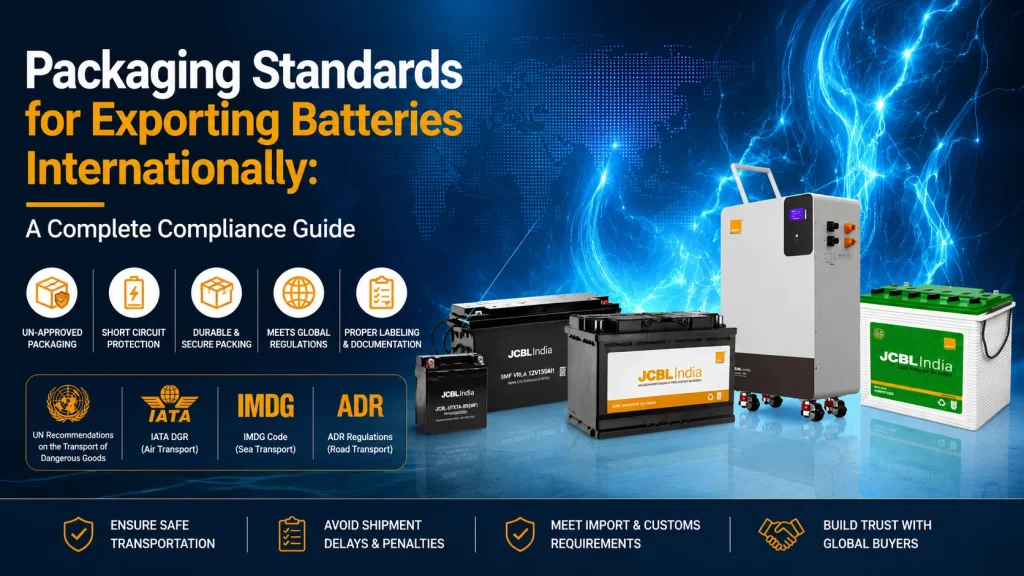
Exporting batteries requires more than quality products; it demands strict compliance with international packaging standards to ensure safe transportation and seamless customs clearance. Whether shipping lead-acid, lithium-ion, nickel-metal hydride, or other battery types, manufacturers and exporters must follow globally recognized packaging regulations to minimize safety risks, prevent shipment delays, and meet country-specific import requirements.
This guide explains the essential packaging standards for exporting batteries internationally, helping manufacturers, OEMs, distributors, and procurement professionals understand the compliance requirements for global battery shipments.
What Are the Packaging Standards for Exporting Batteries Internationally?
Packaging standards for exporting batteries internationally require batteries to be packed using UN-approved packaging, protected against short circuits and physical damage, labeled with appropriate hazard markings, and accompanied by the required shipping documentation. Exporters must also comply with international transport regulations, including the UN Recommendations on the Transport of Dangerous Goods, the IATA Dangerous Goods Regulations (DGR), the IMDG Code, and applicable destination-country requirements.
Why Battery Packaging Standards Matter
Proper battery packaging is essential for both safety and regulatory compliance. Batteries can pose risks such as leakage, overheating, or short circuits if packed incorrectly, making them subject to strict transportation regulations.
Complying with international packaging standards helps businesses:
- Ensure safe handling during air, sea, and road transportation
- Reduce the risk of damaged or rejected shipments
- Meet customs and carrier compliance requirements
- Minimize transportation delays and penalties
- Protect products from moisture, vibration, and impact during transit
- Build trust with global buyers and logistics partners
International Regulations Governing Battery Packaging
Battery exporters should comply with internationally recognized transportation standards based on the shipping method.
1. UN Recommendations on the Transport of Dangerous Goods
The United Nations establishes globally accepted guidelines for transporting dangerous goods. These recommendations define packaging performance requirements, UN specification packaging, package testing, and identification through appropriate UN numbers.
2. IATA Dangerous Goods Regulations (DGR)
For air freight, the International Air Transport Association (IATA) Dangerous Goods Regulations specify packaging instructions, quantity limitations, labeling requirements, and handling procedures for batteries, particularly lithium batteries.
3. IMDG Code
The International Maritime Dangerous Goods (IMDG) Code governs battery transportation by sea. It outlines packaging, container loading, segregation, marking, and documentation requirements to ensure marine transport safety.
4. ADR Regulations
For road transportation in many international markets, ADR regulations specify packaging, labeling, vehicle safety, and cargo securing requirements for dangerous goods.
5. Destination Country Requirements
Import regulations may differ across countries and regions. Exporters should always verify destination-specific packaging, labeling, environmental, and customs requirements before dispatching shipments.
Essential Packaging Requirements for Exporting Batteries
1. Use UN-Certified Packaging
Where required, batteries should be packed in UN performance-tested packaging that meets internationally accepted strength and safety standards. Certified packaging helps withstand vibration, compression, and impact during transportation.
2. Prevent Short Circuits
Battery terminals should be protected to prevent accidental contact during transit.
Common methods include:
- Insulating exposed terminals
- Using terminal caps or protective covers
- Separating batteries with non-conductive materials
- Packing batteries individually when necessary
3. Protect Against Physical Damage
Outer packaging should be durable enough to protect batteries from impacts and rough handling.
Suitable protective materials include:
- Corrugated cartons
- Foam inserts
- Molded trays
- Shock-absorbing cushioning materials
4. Secure Batteries Inside the Package
Batteries should remain stable throughout transportation. Internal partitions, dividers, or cushioning should prevent movement, reducing the risk of damage.
5. Use Leak-Resistant Packaging Where Applicable
Certain battery types require packaging designed to prevent electrolyte leakage during transportation. Leak-resistant packaging protects surrounding cargo and helps meet transport safety requirements.
6. Control Weight and Load Distribution
Packages should comply with applicable weight limitations and stacking requirements to maintain package integrity throughout the shipping process.
7. Protect Against Moisture
Moisture-resistant packaging materials help safeguard batteries from humidity, corrosion, and environmental exposure during international transit, particularly for sea freight.
8. Seal Packages Properly
Strong sealing materials such as reinforced packing tape or approved sealing systems help maintain package integrity throughout handling and transportation.
Required Labels and Package Markings
Correct labeling is critical for international battery shipments.
Depending on battery chemistry and transportation mode, packages may require:
- UN number identification
- Applicable hazard labels
- Lithium battery mark (where applicable)
- Orientation arrows for specific battery types
- Handling instructions
- Consignee and shipper information
- Package certification markings, where required
Improper or missing labels may result in shipment rejection or customs delays.
Documentation Required for Battery Exports
Accurate documentation supports smooth customs clearance and regulatory compliance.
Common export documents include:
- Commercial Invoice
- Packing List
- Dangerous Goods Declaration (when applicable)
- Safety Data Sheet (SDS/MSDS)
- UN 38.3 Test Summary (for applicable lithium batteries)
- Certificate of Origin, if required by the importing country
Maintaining complete and accurate documentation reduces the likelihood of shipment delays and compliance issues.
Common Packaging Mistakes That Delay Battery Shipments
Many export delays occur due to avoidable packaging errors, including:
- Using non-compliant packaging materials
- Inadequate terminal insulation
- Incorrect or missing hazard labels
- Poor internal cushioning
- Incomplete shipping documentation
- Mixing incompatible battery types in one package
- Damaged or weak outer cartons
- Failure to follow carrier-specific packaging instructions
Implementing standardized packaging procedures helps minimize these risks.
Best Practices for Export-Compliant Battery Packaging
Businesses exporting batteries internationally should adopt the following best practices:
- Use certified packaging materials that meet applicable regulations.
- Train packaging personnel on dangerous goods handling procedures.
- Conduct packaging inspections before shipment.
- Keep regulatory documentation updated.
- Verify destination-country packaging requirements.
- Work with experienced freight forwarders familiar with battery transportation.
- Regularly review international transport regulation updates.
These practices improve shipment safety, reduce compliance risks, and enhance operational efficiency.
Choosing a Battery Manufacturer with Global Export Capabilities
For distributors, importers, and OEM buyers, selecting a battery manufacturer with proven export expertise is equally important.
Consider manufacturers that:
- Follow internationally recognized quality management systems
- Use compliant packaging for global shipments
- Understand UN, IATA, IMDG, and ADR requirements
- Provide complete export documentation
- Maintain robust quality inspection processes
- Have experience supplying international markets
Partnering with an export-ready manufacturer helps reduce logistics challenges and ensures smoother cross-border deliveries.
Conclusion
International battery exports require careful attention to packaging standards, safety regulations, and documentation. Using compliant packaging, protecting batteries from damage, applying correct labels, and meeting global transportation requirements help businesses ensure safe delivery, avoid shipment disruptions, and maintain regulatory compliance.
For manufacturers and exporters serving international markets, following recognized packaging standards is not only a legal requirement but also a key factor in building long-term trust with global customers.
FAQs
Batteries should be packed in applicable UN-approved packaging, protected from short circuits and physical damage, labeled correctly, and shipped with the required documentation for the transport mode and battery type.
Not all batteries are classified the same way. Classification depends on the battery chemistry, capacity, and applicable transportation regulations. Exporters should verify the classification before shipment.
Depending on the shipment, packages may require UN numbers, hazard labels, lithium battery marks, orientation arrows, handling labels, and shipper and consignee information.
Typical documents include a Commercial Invoice, Packing List, Safety Data Sheet (SDS), Dangerous Goods Declaration (when applicable), UN 38.3 Test Summary for applicable lithium batteries, and any country-specific certificates.
UN-certified packaging is tested to withstand transportation hazards such as impact, vibration, and compression, helping businesses comply with international regulations and reduce the risk of shipment damage.