

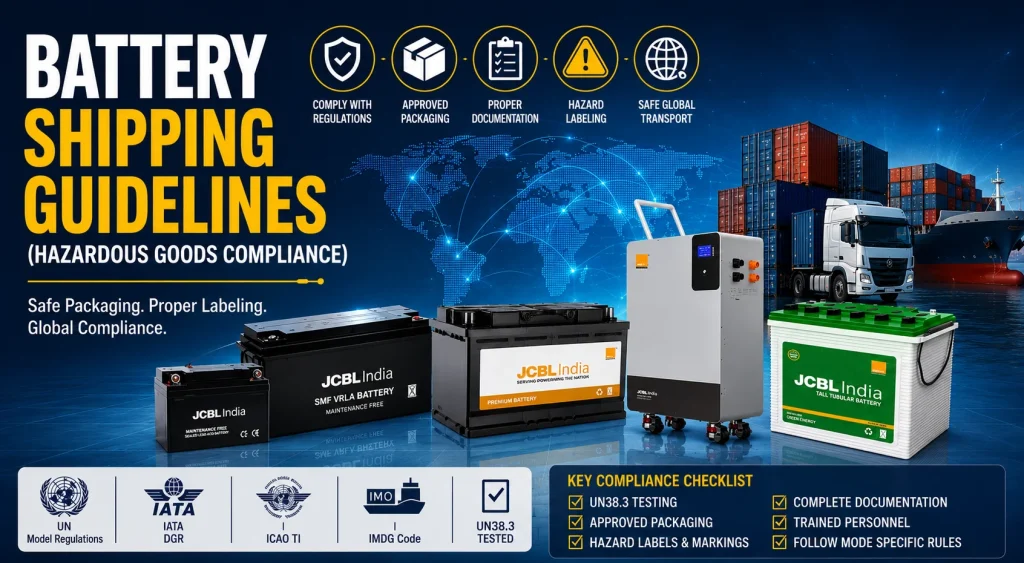
Transporting batteries requires more than standard packaging and shipping procedures. Many battery types, particularly lithium-ion, lithium metal, and wet lead-acid batteries, are classified as hazardous goods due to risks such as fire, thermal runaway, chemical leakage, and short circuits. Failure to comply with applicable regulations can lead to shipment delays, penalties, rejected consignments, or safety incidents.
This guide explains the essential battery shipping guidelines, including hazardous goods classification, packaging, labeling, documentation, and international compliance requirements for domestic and cross-border transportation.
Why Are Batteries Classified as Hazardous Goods?
Certain batteries contain chemicals or store significant electrical energy that can become hazardous if damaged or improperly handled during transportation.
Common risks include:
- Thermal runaway in lithium batteries
- Fire caused by short circuits
- Leakage of corrosive electrolytes from lead-acid batteries
- Explosion due to damaged battery cells
- Environmental contamination from chemical spills
Hazardous goods regulations are designed to minimize these risks and ensure safe transportation throughout the supply chain.
Which Batteries Are Regulated for Shipping?
Different battery chemistries are subject to different transport requirements.
| Battery Type | Hazard Classification | Typical Shipping Requirements |
| Lithium-Ion Batteries | Class 9 Dangerous Goods | UN38.3 testing, approved packaging, hazard labels |
| Lithium Metal Batteries | Class 9 Dangerous Goods | Quantity limits, specialized labeling |
| Wet Lead-Acid Batteries | Class 8 Corrosive | Leak-proof packaging and corrosion protection |
| Non-Spillable AGM/Gel Batteries | May qualify for exceptions if compliant | Packaging and documentation may still apply |
Always verify the battery’s classification before preparing a shipment, as regulatory requirements vary by battery type and transport mode.
Key Regulations Governing Battery Transportation
Battery shipments must comply with internationally recognized hazardous goods regulations.
UN Model Regulations
The United Nations Model Regulations provide the foundation for classifying dangerous goods, assigning UN numbers, and establishing packaging and labeling requirements adopted worldwide.
IATA Dangerous Goods Regulations (Air Transport)
Battery shipments transported by air must comply with the International Air Transport Association (IATA) Dangerous Goods Regulations, including packaging instructions, quantity limits, and documentation requirements.
ICAO Technical Instructions
The International Civil Aviation Organization (ICAO) establishes mandatory technical standards for the safe transport of dangerous goods by air, which form the basis for many airline requirements.
IMDG Code (Sea Freight)
International maritime shipments must comply with the International Maritime Dangerous Goods (IMDG) Code, covering container packing, segregation, labeling, and emergency response information.
Road and Rail Regulations
Road and rail transport regulations, such as ADR in Europe and applicable national transport rules in other countries, govern battery transportation within domestic and regional markets.
Battery Shipping Compliance Checklist
Before dispatching any battery shipment, verify the following:
- Identify the correct UN number and hazard classification
- Confirm applicable transport regulations
- Complete UN38.3 testing for lithium batteries
- Use approved packaging suitable for the battery type
- Protect battery terminals against short circuits
- Apply required hazard labels and shipping marks
- Prepare all mandatory dangerous goods documentation
- Inspect packages for damage before shipping
- Ensure personnel handling shipments are trained in hazardous goods procedures
Using a standardized compliance checklist helps reduce shipping errors and minimizes the risk of rejected shipments.
Packaging Requirements for Battery Shipping
Proper packaging is one of the most important aspects of hazardous goods compliance.
1. Use Approved Packaging
Select packaging that meets applicable UN performance standards when required. Packaging should protect batteries from physical damage throughout transportation.
2. Prevent Short Circuits
Battery terminals should be insulated or individually protected using non-conductive materials to prevent accidental contact during transit.
3. Provide Internal Cushioning
Use suitable cushioning materials to prevent movement, vibration, or impact damage inside the package.
4. Prevent Leakage
Wet lead-acid batteries should remain upright in leak-resistant packaging designed to contain electrolyte in case of accidental damage.
5. Secure Outer Packaging
Outer cartons should remain durable, properly sealed, and capable of withstanding handling during loading, unloading, and transportation.
Battery Labeling and Marking Requirements
Hazardous battery shipments must display appropriate markings and labels to ensure safe handling throughout the logistics chain.
Common labeling requirements include:
- Correct UN number
- Proper Shipping Name
- Lithium Battery Mark (where applicable)
- Class 9 hazard label for lithium batteries
- Class 8 corrosive label for applicable lead-acid batteries
- Cargo Aircraft Only label when required
- Orientation arrows for specified packages
- Handling instructions where applicable
Incorrect or missing labels are among the most common reasons battery shipments are delayed or rejected.
Documentation Required for Battery Shipments
Accurate documentation is essential for regulatory compliance.
Depending on the shipment, required documents may include:
- Dangerous Goods Declaration (DGD)
- Commercial Invoice
- Packing List
- Air Waybill or Bill of Lading
- UN38.3 Test Summary for lithium batteries
- Safety Data Sheet (SDS), where applicable
- Import or export documentation required by destination countries
Maintaining complete and accurate documentation helps customs authorities and transport operators process shipments efficiently.
Understanding UN38.3 Testing
UN38.3 is a mandatory transportation testing requirement for lithium batteries before they enter commercial distribution.
The testing evaluates whether batteries can safely withstand conditions such as vibration, shock, altitude simulation, temperature changes, impact, overcharge, and short-circuit events encountered during transportation.
Manufacturers and exporters should maintain accessible UN38.3 test summaries, as logistics providers and regulatory authorities may request them before accepting shipments.
Common Battery Shipping Mistakes
Many compliance issues result from avoidable errors.
The most common mistakes include:
- Incorrect battery classification
- Using non-compliant packaging
- Missing hazard labels
- Incomplete dangerous goods documentation
- Shipping damaged or defective batteries
- Failing to protect battery terminals
- Exceeding permitted quantity limits
- Not verifying carrier-specific requirements
Conducting a final compliance review before dispatch significantly reduces shipment risks.
Best Practices for Hazardous Goods Compliance
Businesses shipping batteries regularly can improve compliance by adopting standardized procedures.
Recommended best practices include:
- Stay updated on changing hazardous goods regulations.
- Verify battery classifications before shipping.
- Use certified packaging materials.
- Maintain complete testing and compliance records.
- Train employees involved in packaging and shipping.
- Perform pre-shipment quality inspections.
- Work with logistics partners experienced in hazardous goods transportation.
- Review carrier-specific requirements before every shipment.
A structured compliance process helps improve safety, reduce delays, and support smooth domestic and international battery transportation.
Conclusion
Shipping batteries safely requires careful attention to hazardous goods regulations, proper packaging, accurate labeling, and complete documentation. Whether transporting lithium-ion, lithium metal, or lead-acid batteries, compliance with international standards such as the UN Model Regulations, IATA Dangerous Goods Regulations, and the IMDG Code is essential for minimizing transportation risks and avoiding shipment disruptions.
By implementing standardized compliance procedures and following applicable regulatory requirements, manufacturers, exporters, distributors, and logistics providers can ensure safer battery transportation while meeting global trade and regulatory expectations.
FAQs
Yes. Most lithium-ion and lithium metal batteries are classified as Class 9 hazardous goods because they present fire and thermal runaway risks during transportation.
UN38.3 is a transportation safety testing requirement for lithium batteries that verifies they can safely withstand normal shipping conditions before entering commercial transport.
Depending on the shipment, documents may include a Dangerous Goods Declaration, commercial invoice, packing list, transport document, UN38.3 test summary, and Safety Data Sheet where applicable.
Yes. Wet lead-acid batteries generally require leak-resistant packaging, corrosion protection, appropriate hazard labels, and compliance with applicable dangerous goods regulations.
The most common reasons include incorrect classification, improper packaging, missing hazard labels, incomplete documentation, damaged batteries, or failure to comply with hazardous goods regulations.