

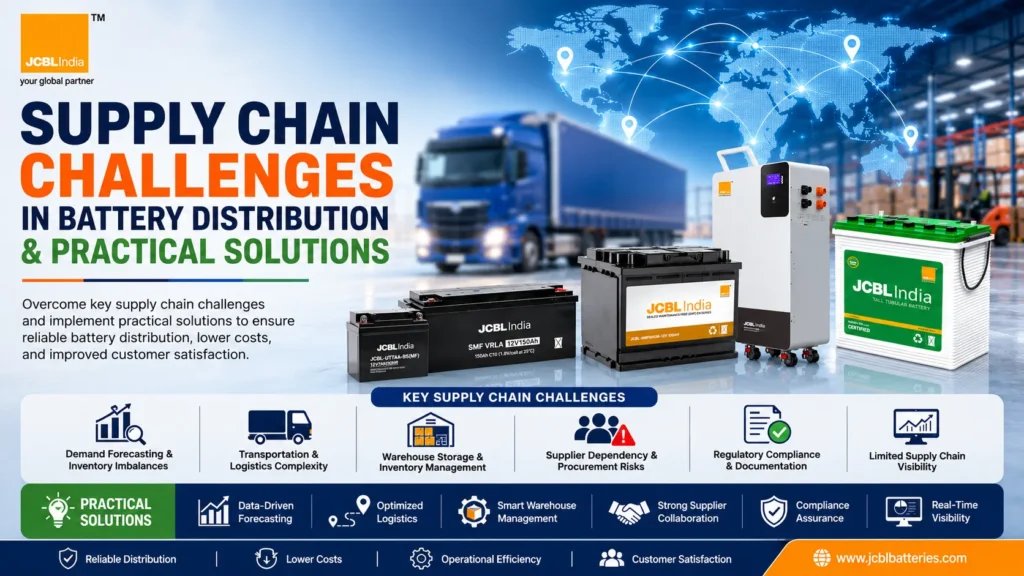
Battery distribution involves managing inventory, warehousing, transportation, supplier coordination, and regulatory compliance to ensure automotive, industrial, and backup batteries are available when customers need them. However, disruptions at any stage of the supply chain can lead to stock shortages, delayed deliveries, higher operating costs, and reduced service efficiency.
The most common supply chain challenges in battery distribution include inaccurate demand forecasting, inventory imbalances, transportation delays, warehouse inefficiencies, supplier dependency, regulatory compliance, and limited supply chain visibility. Addressing these challenges through better planning, digital tools, and stronger supplier collaboration can help distributors build a more resilient and efficient distribution network.
This guide explains each challenge, why it affects battery distributors, and practical solutions that support smoother operations across the supply chain.
Why Battery Distribution Requires a Specialized Supply Chain
Battery distribution is more complex than standard product distribution because it involves managing multiple operational factors across the supply chain. Distributors handling automotive, industrial, and backup power batteries must balance inventory, logistics, supplier coordination, and compliance while ensuring products reach customers on time.
Key factors that make battery distribution unique include:
- Multiple battery categories: Different battery types may have varying storage, handling, and transportation requirements.
- Complex distribution network: Coordination is required between manufacturers, suppliers, logistics providers, warehouses, distributors, dealers, and commercial customers.
- Inventory management: Maintaining the right stock levels helps reduce shortages, excess inventory, and fulfillment delays.
- Regulatory compliance: Certain battery shipments may require specific packaging, labeling, documentation, and transportation procedures.
- Supply chain visibility: Real-time tracking of inventory and shipments supports faster decision-making and better customer service.
Because each stage of the supply chain is interconnected, disruptions in procurement, warehousing, transportation, or inventory management can affect overall distribution performance. A well-planned supply chain helps distributors improve operational efficiency, maintain product availability, and respond more effectively to changing market demand.
Key Supply Chain Challenges in Battery Distribution
1. Demand Forecasting and Inventory Imbalances
Fluctuating demand across automotive, industrial, and backup power applications can lead to excess inventory or stock shortages, affecting working capital and order fulfillment.
Solutions:
- Analyze historical sales and demand trends
- Use inventory management software for real-time stock visibility
- Collaborate with suppliers for better procurement planning
- Review demand forecasts regularly
2. Transportation and Logistics Complexity
Battery distribution involves multiple warehouses, transportation partners, and shipping regulations. Delays caused by documentation issues, customs clearance, or carrier availability can disrupt deliveries.
Solutions:
- Plan transportation routes in advance
- Partner with experienced logistics providers
- Use real-time shipment tracking
- Standardize shipping documentation
- Follow applicable transportation regulations such as IATA, IMO, and UNECE guidelines where relevant
3. Warehouse Storage and Inventory Management
Poor warehouse organization and inaccurate inventory records can slow order fulfillment and reduce inventory visibility.
Solutions:
- Implement a Warehouse Management System (WMS)
- Use barcode or RFID tracking
- Organize storage with clearly defined zones
- Conduct regular inventory audits
- Follow appropriate stock rotation practices
Common Mistakes: Manual inventory tracking, inconsistent warehouse layouts, delayed inventory reconciliation, and poor monitoring of slow-moving stock.
4. Supplier Dependency and Procurement Risks
Relying on a limited number of suppliers can increase the risk of supply disruptions, longer lead times, and inconsistent product availability.
Solutions:
- Diversify qualified suppliers
- Monitor supplier performance
- Maintain regular supplier communication
- Align procurement with demand forecasts
- Maintain safety stock for high-demand products
5. Regulatory Compliance and Documentation
Battery shipments may require specific packaging, labeling, documentation, and transportation procedures depending on battery type and destination. Non-compliance can lead to shipping delays and operational disruptions.
Solutions:
- Keep shipping documentation up to date
- Train warehouse and logistics teams
- Review compliance requirements regularly
- Work with logistics providers experienced in battery transportation
- Monitor applicable regulations from IATA, IMO, and UNECE
6. Limited Supply Chain Visibility
Limited visibility into inventory, supplier performance, and shipments can delay decision-making and affect customer service.
Solutions:
- Integrate ERP and WMS systems
- Track shipments in real time
- Use inventory dashboards
- Implement Transportation Management Systems (TMS)
- Improve supplier collaboration through digital platforms
Best Practices to Improve Battery Distribution Efficiency
The following practices can help distributors build a more resilient and efficient battery supply chain.
| Best Practice | How It Supports Distribution |
| Improve demand forecasting | Supports balanced inventory and procurement planning |
| Diversify suppliers | Reduces sourcing dependency and supply disruptions |
| Optimize warehouse operations | Improves inventory accuracy and order fulfillment |
| Use digital inventory tracking | Provides real-time stock visibility |
| Strengthen logistics planning | Helps streamline transportation and deliveries |
| Monitor compliance regularly | Supports smoother domestic and international shipments |
| Invest in supply chain technology | Improves operational visibility and decision-making |
| Review supply chain performance | Identifies opportunities for continuous improvement |
Technologies Supporting Modern Battery Distribution
Digital transformation is helping battery distributors improve efficiency across every stage of the supply chain. Rather than replacing existing processes, these technologies provide better visibility, automation, and operational control.
Common technologies include:
- Warehouse Management Systems (WMS): Improve inventory accuracy, storage organization, and order picking.
- Enterprise Resource Planning (ERP): Connect procurement, inventory, sales, and finance into a single operational platform.
- Transportation Management Systems (TMS): Support shipment planning, carrier selection, and freight tracking.
- Barcode and RFID Solutions: Enable faster inventory updates and reduce manual errors.
- Inventory Analytics: Help identify purchasing trends and optimize stock replenishment.
- GPS Shipment Tracking: Provides real-time updates on deliveries and improves communication across the supply chain.
Selecting technologies that align with operational requirements can help distributors improve efficiency while supporting long-term business growth.
Conclusion
Battery distribution for automotive, industrial, and backup power applications requires careful coordination across procurement, warehousing, logistics, and customer fulfillment. Challenges such as inventory imbalances, transportation complexity, supplier dependency, compliance requirements, and limited supply chain visibility can influence day-to-day operations and overall business performance.
Building a resilient supply chain is not about eliminating every disruption—it is about improving preparedness and responsiveness. By strengthening demand forecasting, diversifying supplier networks, adopting digital technologies, optimizing warehouse operations, and maintaining robust compliance processes, battery distributors can enhance operational efficiency and better adapt to changing market conditions.
As supply chains continue to evolve, businesses that prioritize continuous improvement, data-driven decision-making, and cross-functional collaboration will be better positioned to support reliable battery distribution and long-term customer relationships.
FAQs
The most common challenges include demand forecasting, inventory management, transportation complexity, warehouse operations, supplier dependency, regulatory compliance, and supply chain visibility. Addressing these areas can help improve operational efficiency and distribution reliability.
Effective inventory management helps distributors maintain appropriate stock levels, reduce excess inventory, improve order fulfillment, and respond more efficiently to changing customer demand.
Technologies such as ERP systems, Warehouse Management Systems (WMS), Transportation Management Systems (TMS), barcode/RFID tracking, and inventory analytics provide greater visibility across the supply chain and support more informed operational decisions.
Distributors can strengthen supply chain resilience by diversifying suppliers, improving demand forecasting, monitoring inventory in real time, maintaining clear communication with logistics partners, and regularly reviewing procurement and transportation strategies.
Compliance helps ensure batteries are packaged, documented, and transported according to applicable regulations. Staying informed about relevant requirements can support smoother shipments, reduce administrative issues, and improve supply chain reliability.