

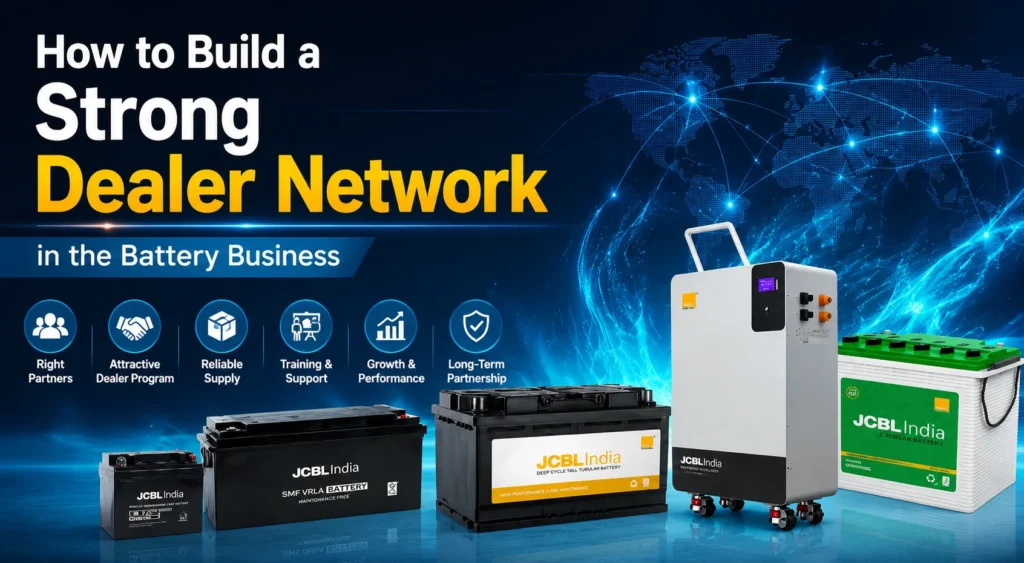
A strong dealer network is one of the biggest drivers of growth in the battery business. Whether you manufacture automotive, inverter, solar, or industrial batteries, your dealers serve as the direct link between your brand and end customers. An effective dealer network not only expands market reach but also improves product availability, customer service, and brand credibility.
However, building a successful dealer network requires more than appointing distributors across different regions. It involves selecting the right partners, providing consistent support, and maintaining long-term business relationships. This guide outlines practical strategies to help battery manufacturers and brands build a scalable and high-performing dealer network.
Why a Strong Dealer Network Matters
A well-managed dealer network enables battery manufacturers to grow sustainably by increasing market penetration and strengthening customer trust. Dealers with strong local relationships can respond to regional demand, provide timely support, and improve product accessibility.
A robust dealer network helps businesses:
- Expand into new markets efficiently
- Improve product availability and delivery
- Increase brand visibility and customer confidence
- Strengthen after-sales support
- Generate repeat business and long-term revenue
- Gather valuable market feedback for future planning
A successful battery dealer network is built on reliable partnerships, consistent product supply, competitive dealer programs, and ongoing business support.
Step-by-Step Guide to Building a Strong Battery Dealer Network
1. Define Your Target Market
Before recruiting dealers, clearly identify the markets you want to serve. Different battery segments require different distribution strategies.
Consider factors such as:
- Automotive, inverter, solar, or industrial batteries
- Urban versus rural demand
- Commercial and fleet customers
- Regional purchasing patterns
- Local competition and growth opportunities
A focused market strategy helps recruit dealers who already understand the needs of their target customers.
2. Select Dealers with the Right Business Capabilities
Choosing the right partners is more important than expanding quickly. Evaluate potential dealers based on their ability to represent your brand and support customers effectively.
Look for dealers with:
- Experience in the battery or automotive industry
- A strong customer and retailer network
- Financial stability
- Adequate warehouse and inventory capacity
- Good market reputation
- Commitment to long-term business growth
Selecting quality partners reduces operational risks and improves dealer performance over time.
3. Offer a Competitive Dealer Program
An attractive dealer program encourages partners to promote your products actively. While pricing is important, long-term business support often has a greater impact on dealer loyalty.
A comprehensive dealer program may include:
- Competitive profit margins
- Volume-based incentives
- Performance rewards
- Marketing and branding support
- Sales training
- Dedicated account management
Clear and transparent policies help build trust and encourage long-term partnerships.
4. Ensure Consistent Product Availability
Even the best dealers cannot grow sales if products are frequently out of stock. Efficient supply chain planning is essential for maintaining customer confidence.
Manufacturers should focus on:
- Accurate demand forecasting
- Regional inventory planning
- Timely replenishment
- Reliable logistics
- Seasonal stock management
Consistent product availability enables dealers to meet customer expectations and minimize lost sales opportunities.
5. Invest in Product and Technical Training
Battery technology continues to evolve with advancements in electric vehicles, renewable energy, and energy storage systems. Dealers who understand product specifications and applications are better equipped to guide customers.
Training programs should cover:
- Product features and applications
- Battery selection guidelines
- Installation and maintenance basics
- Warranty procedures
- Safe handling and storage practices
- Effective sales techniques
Well-trained dealers provide better customer experiences and strengthen brand credibility.
6. Support Dealers with Marketing Initiatives
Local marketing support helps dealers generate demand while maintaining consistent brand messaging.
Useful marketing support includes:
- Point-of-sale displays
- Promotional materials
- Digital marketing assets
- Dealer branding
- Product catalogs
- Local campaigns and events
Joint marketing initiatives improve brand visibility and create new sales opportunities in regional markets.
7. Use Digital Tools for Dealer Management
Technology simplifies dealer operations and improves communication between manufacturers and channel partners.
Modern dealer management systems can help with:
- Online order management
- Inventory visibility
- Sales reporting
- Warranty registration
- Dealer performance tracking
- Customer relationship management (CRM)
Digital platforms also provide real-time business insights that support faster decision-making.
8. Build Long-Term Dealer Relationships
Strong dealer networks are built through consistent engagement rather than one-time appointments.
Manufacturers should:
- Conduct regular business reviews
- Communicate product updates
- Address dealer concerns promptly
- Recognize top-performing partners
- Collect market feedback
- Maintain transparent business policies
Long-term collaboration encourages dealer loyalty and creates mutual growth opportunities.
Common Mistakes to Avoid
Many dealer expansion strategies fail because businesses prioritize rapid growth over partner quality. Avoid these common mistakes:
- Appointing Dealers Without Proper Evaluation: Selecting partners solely to increase market coverage can lead to poor sales performance and inconsistent customer experiences.
- Ignoring Regional Market Demand: A standardized distribution strategy may not suit every region. Understanding local customer needs helps improve dealer productivity.
- Weak Inventory Planning: Frequent stock shortages affect dealer confidence and may encourage customers to switch brands.
- Limited Dealer Training: Without adequate product knowledge, dealers may struggle to recommend the right battery solutions or explain product benefits effectively.
- Poor After-Sales Support: Timely warranty assistance and responsive technical support are essential for maintaining dealer and customer satisfaction.
Key Metrics to Measure Dealer Network Performance
Tracking performance helps identify growth opportunities and improve dealer engagement.
Important KPIs include:
| KPI | Why It Matters |
| Active Dealers | Measures network expansion |
| Sales per Dealer | Indicates dealer productivity |
| Dealer Retention Rate | Reflects partner satisfaction |
| Market Coverage | Evaluates regional presence |
| Inventory Turnover | Assesses supply chain efficiency |
| Order Fulfillment Time | Measures operational performance |
| Warranty Resolution Time | Indicates service quality |
Regular performance reviews help manufacturers make informed decisions and strengthen their distribution strategy.
Best Practices for Sustainable Dealer Growth
A successful battery dealer network is built through continuous improvement rather than rapid expansion. Businesses should prioritize the following:
- Partner quality over dealer quantity
- Transparent pricing and business policies
- Reliable product supply
- Continuous product and sales training
- Strong marketing support
- Efficient warranty and service processes
- Digital dealer management systems
- Regular performance monitoring
- Long-term relationship building
These practices create a stronger distribution ecosystem while improving dealer profitability and customer satisfaction.
Conclusion
Building a strong dealer network in the battery business requires a strategic approach that goes beyond product distribution. The right dealer partners, supported by reliable supply chains, technical training, transparent business policies, and digital management systems, can significantly improve market reach and long-term business performance.
Rather than focusing solely on expanding the number of dealers, manufacturers should invest in developing capable, well-supported, and engaged channel partners. A structured dealer network not only strengthens brand reputation but also creates sustainable growth opportunities in an increasingly competitive battery market.
FAQs
Building a strong battery dealer network involves selecting reliable dealers, offering competitive dealer programs, ensuring consistent product availability, providing product training, supporting local marketing, and maintaining long-term business relationships through regular communication and performance reviews.
An ideal battery dealer should have industry experience, a strong local customer base, financial stability, adequate storage facilities, a good market reputation, and the ability to provide reliable sales and after-sales support.
Dealer training helps partners understand battery products, applications, installation practices, warranty procedures, and customer requirements. Well-trained dealers can provide better product recommendations, improve customer satisfaction, and represent the brand more effectively.
Battery manufacturers can improve dealer loyalty by ensuring timely product supply, offering transparent pricing and incentive programs, providing marketing and technical support, resolving warranty issues efficiently, and maintaining regular communication with dealers.
Key dealer network KPIs include the number of active dealers, sales per dealer, dealer retention rate, market coverage, inventory turnover, order fulfillment time, and warranty resolution time. Monitoring these metrics helps identify growth opportunities and improve overall channel performance.