

A battery may leave the factory in perfect condition but arrive with cracked casings, damaged terminals, acid leakage, or reduced performance if it is not transported correctly. Transportation-related damage not only increases replacement costs and warranty claims but also affects customer trust and supply chain efficiency.
Whether you’re an automotive battery manufacturer, distributor, retailer, or fleet operator, understanding how to minimize damage during battery transport is essential to maintaining product quality. This guide explains proven transportation practices, common mistakes to avoid, and practical recommendations tailored to India’s logistics environment.
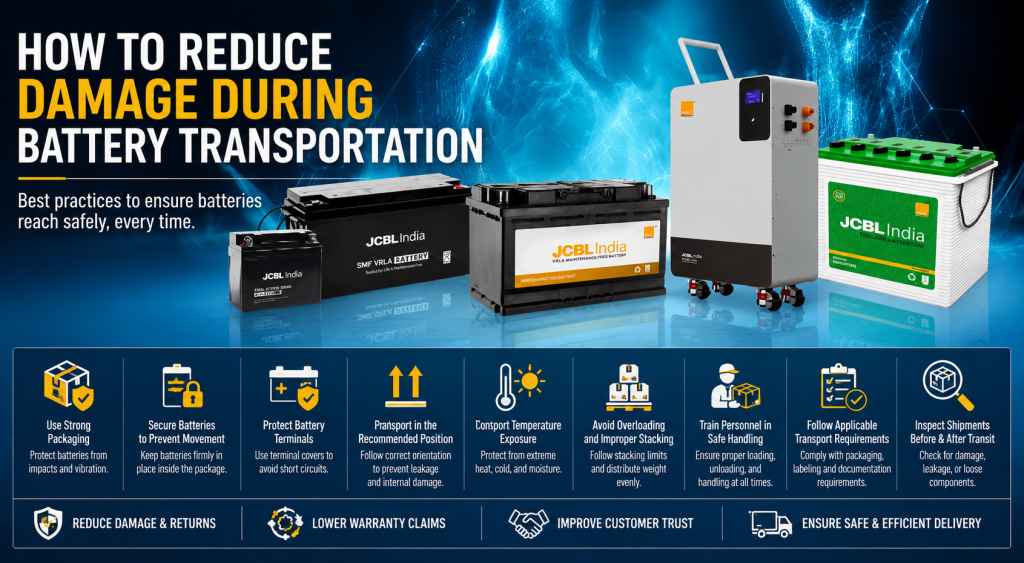
Battery damage during transportation can be minimized by using robust packaging, securing batteries to prevent movement, protecting terminals, transporting them in the recommended position, controlling temperature exposure, training handlers, following applicable transportation requirements, and inspecting shipments before dispatch and delivery.
Why Do Batteries Get Damaged During Transportation?
Transportation exposes batteries to constant vibration, sudden impacts, rough road conditions, repeated loading and unloading, and changing weather. These factors can damage both the battery’s exterior and internal components.
Common causes include:
- Excessive vibration during long-distance transport
- Poor-quality or loose packaging
- Improper stacking and overloading
- Mishandling during loading or unloading
- Exposure to extreme heat, moisture, or rain
- Unprotected battery terminals causing short circuits
- Incorrect battery positioning during transit
For flooded lead-acid batteries, excessive vibration may loosen internal plates over time, while repeated impacts can crack battery casings or damage terminals. Even maintenance-free batteries can suffer reduced performance if transported carelessly.
Why Safe Battery Transportation Matters
Proper transportation protects more than just the battery.
It helps businesses:
- Reduce product damage and returns
- Lower warranty claims
- Improve customer satisfaction
- Minimize logistics costs
- Maintain consistent product quality
- Strengthen brand reputation
- Ensure smoother distribution across India
For manufacturers and distributors handling bulk shipments, preventing transportation damage is often more cost-effective than replacing damaged products.
10 Best Practices to Reduce Damage During Battery Transportation
1. Use Strong, Battery-Specific Packaging
Packaging is the first layer of protection against impacts, compression, and vibration.
Choose packaging that includes:
- Heavy-duty corrugated cartons
- Reinforced plastic crates
- Wooden boxes for heavy industrial batteries where appropriate
- Shock-absorbing inserts
- Moisture-resistant outer wrapping
Packaging should hold the battery securely without allowing unnecessary movement during transit.
2. Secure Batteries to Prevent Internal Movement
Movement inside packaging is one of the leading causes of transportation damage.
Use:
- Foam inserts
- Cushioning materials
- Stretch wrap
- Plastic or metal strapping
- Protective separators between batteries
Properly secured batteries are less likely to suffer cracked casings, damaged terminals, or internal component failures caused by repeated impacts.
3. Transport Batteries in the Recommended Position
Most automotive lead-acid batteries should be transported upright unless the manufacturer specifies otherwise.
Correct positioning helps:
- Reduce leakage risks
- Prevent unnecessary pressure on internal components
- Improve shipment stability
Always follow the battery manufacturer’s transportation recommendations for the specific battery type.
4. Protect Battery Terminals from Short Circuits
Battery terminals should never remain exposed during transportation.
Protect terminals using:
- Insulating terminal caps
- Non-conductive covers
- Individual separators where required
This prevents accidental contact with conductive materials, reducing the risk of short circuits, sparks, and terminal damage during handling.
5. Avoid Overloading and Improper Stacking
Incorrect stacking places excessive pressure on lower cartons and battery casings.
Best practices include:
- Following recommended stacking limits
- Distributing weight evenly across pallets
- Avoiding heavy cargo above battery shipments
- Securing stacked loads before transport
Stable stacking significantly reduces crushing and movement during transit.
6. Protect Batteries from Heat and Moisture
India’s diverse climate presents unique transportation challenges. High summer temperatures, humidity, and monsoon rainfall can affect battery condition if shipments are left unprotected.
To reduce environmental damage:
- Avoid prolonged exposure to direct sunlight.
- Cover shipments during rain.
- Store batteries in ventilated vehicles or warehouses.
- Minimize unnecessary transit delays.
These measures are especially important for long-distance battery transportation across India.
7. Use Proper Palletization Techniques
Proper palletization improves load stability and handling efficiency.
Recommended practices include:
- Using durable wooden or plastic pallets
- Stretch-wrapping the complete load
- Installing corner protectors
- Keeping weight evenly distributed
- Securing pallets before dispatch
Well-palletized shipments experience less movement during transportation.
8. Train Personnel in Safe Handling Procedures
Many transportation-related battery failures result from improper handling rather than defective products.
Personnel should be trained to:
- Lift batteries safely
- Operate forklifts correctly
- Avoid dropping batteries
- Handle damaged batteries safely
- Inspect shipments before loading
Consistent handling procedures reduce preventable damage throughout the supply chain.
9. Follow Applicable Transportation Requirements
Battery shipments should comply with applicable packaging, labeling, documentation, and transportation requirements based on battery chemistry and the mode of transport.
Businesses should:
- Use appropriate labels where required
- Follow carrier guidelines
- Maintain accurate shipping documentation
- Use packaging suitable for the battery type
Following recognized transportation practices helps improve shipment safety and reduce delays.
10. Inspect Every Shipment Before and After Transit
Inspection should be part of every dispatch and delivery process.
Check for:
- Cracked casing
- Bulging
- Loose or broken terminals
- Leakage
- Damaged packaging
- Loose pallet wrapping
- Visible transportation damage
Early detection prevents damaged batteries from reaching customers.
Battery Transportation: Do’s and Don’ts
| Do | Don’t |
| Use heavy-duty packaging | Use weak or damaged cartons |
| Keep batteries secure | Allow movement inside boxes |
| Protect battery terminals | Leave terminals exposed |
| Transport in the recommended position | Tilt or invert batteries unnecessarily |
| Inspect before dispatch | Skip quality checks |
| Protect against rain and heat | Leave shipments exposed to weather |
| Train handling personnel | Handle batteries roughly |
Battery Transportation Best Practices for India
Battery transportation in India often involves long road journeys, multiple warehouse transfers, and varying climatic conditions. These factors increase the risk of vibration, handling damage, and weather exposure.
Manufacturers and distributors can improve transportation safety by:
- Choosing experienced logistics partners for battery shipments
- Using weather-resistant packaging during monsoon seasons
- Planning efficient delivery routes to reduce transit time
- Standardizing loading procedures across warehouses
- Performing inspections at every transfer point
- Monitoring high-value shipments during long-distance transportation
These practices help maintain product quality throughout India’s extensive distribution network.
Conclusion
Reducing battery transportation damage requires more than durable packaging—it demands a systematic approach that combines proper handling, secure palletization, terminal protection, environmental safeguards, regulatory compliance, and routine inspections.
By implementing these best practices, businesses can reduce product losses, lower warranty claims, improve customer satisfaction, and ensure batteries arrive safely regardless of transport distance. For manufacturers, distributors, and retailers across India, investing in safe battery transportation is an investment in product reliability, operational efficiency, and long-term customer trust.
FAQs
Improper packaging, excessive vibration, rough handling, and incorrect stacking are the most common causes of battery transportation damage.
Transportation position depends on the battery type and manufacturer guidelines. Many automotive lead-acid batteries should be transported upright to reduce the risk of leakage and internal damage.
Battery terminals should be covered with insulating caps or non-conductive protective covers to prevent accidental short circuits and physical damage.
Yes. High temperatures and prolonged exposure to direct sunlight can affect battery condition. Using ventilated transport, weather-resistant packaging, and minimizing transit delays helps reduce heat-related risks.
Pre-dispatch and delivery inspections help identify cracks, leakage, terminal damage, or packaging issues before batteries reach customers, reducing returns and warranty claims.