

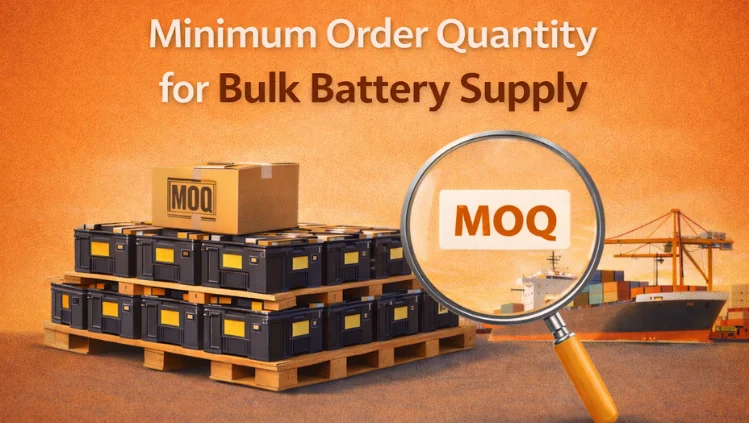
In the international battery trade, understanding Minimum Order Quantity (MOQ) is critical for importers planning bulk procurement. Unlike lightweight consumer goods, automotive batteries are heavy, regulated for transport, and highly freight-sensitive products. Because most automotive batteries are Lead-Acid, they are weight-dense and classified under international transport regulations, making shipment structure a strategic decision.
For distributors, private-label buyers, and procurement managers, MOQ directly influences Landed Cost, container optimization, working capital requirements, and inventory planning. This guide explains how MOQ works in battery exports, why bulk automotive battery supply is usually container-based, and how importers can structure orders efficiently when sourcing from international manufacturers.
What Does Minimum Order Quantity Mean in Battery Export?
Minimum Order Quantity (MOQ) is the lowest number of units a manufacturer requires to run a specific model on the assembly line while keeping production costs efficient & high production target achievements.
Why Suppliers Use MOQ
Battery exporters structure MOQ policies to:
- Optimize production planning
- Reduce packaging and pallet inefficiencies
- Maintain freight cost efficiency
- Ensure safe transport of regulated goods
- Protect distributor-level pricing structures
Because automotive batteries are heavy and freight is weight-driven, small shipments significantly increase per-unit shipping cost and total Landed Cost.
Factory MOQ vs Exporter MOQ
It is important to distinguish between:
- Factory MOQ: The minimum production batch required by the manufacturer.
- Exporter MOQ: The minimum shipment volume structured around container loading and freight economics.
In most bulk automotive battery transactions, exporter MOQ aligns with FCL capacity rather than just manufacturing output.
Why Bulk Battery Supply Is Usually Container-Based
Bulk automotive battery supply is generally structured as FCL (Full Container Load) because batteries are weight-intensive and regulated for international shipment.
1. Freight Economics
Ocean freight pricing heavily depends on container utilization. When a container is fully optimized:
- Freight cost per battery decreases
- Port handling becomes predictable
- Damage risk is reduced
Shipping less than container load (LCL) may lower invoice value but often increases overall Landed Cost per unit.
2. Weight vs Volume Optimization
Unlike many products that fill a container by volume, automotive batteries reach maximum weight limits first.
A 20ft container typically maxes out at 21,000kg to 28,000kg, depending on port and road transport weight regulations. Because Lead-Acid batteries are dense, exporters calculate MOQ based on safe weight loading rather than space.
This is why MOQ in bulk battery export usually equals one optimized container.
3. Dangerous Goods Handling
Automotive batteries are regulated for international maritime transport.
Container-based shipping simplifies:
- Hazardous goods documentation
- Port handling procedures
- Customs clearance coordination
Key regulatory considerations include the following:
- UN2794 classification (Wet, Filled with Acid Batteries)
- Compliance with the IMDG Code (International Maritime Dangerous Goods Code)
For distributors planning international sourcing, containerized battery shipment ensures regulatory simplicity and operational control.
Check our guide How to Import Automotive Batteries in Bulk from India for a complete overview of documentation, certifications, and port processes.
MOQ Comparison: FCL vs LCL in Battery Export
When sourcing bulk automotive batteries, choosing between Full Container Load (FCL) and Less than Container Load (LCL) directly impacts Landed Cost, damage risk, regulatory handling, and delivery timelines. The comparison below highlights the key operational differences importers should evaluate before finalizing shipment structure.
| Criteria | Full Container Load (FCL) | Less than Container Load (LCL) |
| Cost per Unit | Low | High |
| Risk of Damage | Low | High |
| Regulatory Difficulty | Simple | Complex |
| Freight Predictability | Stable | Variable |
| Lead Time | Predictable | May be Delayed |
FCL is the preferred model for bulk automotive battery distributors because it reduces risk and stabilizes Landed Cost.
Typical MOQ Structure in Automotive Battery Supply
Full Container MOQ
Best for: Established distributors and regional wholesalers.
- 20ft or 40ft container options
- Lower per-unit freight cost
- Strong pricing leverage
- Suitable for scalable distribution
This remains the industry standard for bulk automotive battery procurement.
Mixed SKU Container MOQ
Best for: Importers serving multiple vehicle segments.
- Multiple battery models (different SKU) within one container
- Requires production alignment
- Reduces inventory concentration risk
- Needs careful pallet planning
Mixed SKU containers allow flexibility while maintaining FCL freight efficiency.
Trial Order Possibilities
Best for: New market entry or distributor onboarding.
Typically, exporters may allow:
- Consolidated shipments
- Partial load coordination
- Limited SKU testing
However, smaller shipments often result in:
- Higher per-unit Landed Cost
- Longer consolidation timelines
- Increased freight variability
Factors That Influence MOQ in Bulk Battery Orders
1. Battery Type
Different automotive battery technologies influence production and demand cycles:
- SMF (Sealed Maintenance Free)
- Start-Stop Batteries (AGM & EFB Types)
- Dry Charged Batteries
- BCI American Types
Advanced battery types may require larger production batches, influencing MOQ.
Explore our Auto Starting Series category to understand how different automotive battery types are structured for export supply.
2. Market Regulations
Import country certifications, labeling requirements, and environmental compliance standards can affect order structure and shipment timing.
3. Custom Branding Requirements
Private-label production may increase MOQ due to:
- Packaging customization
- Branding material printing
- Dedicated production runs
4. Seasonal Demand
Battery demand often peaks seasonally. Exporters may adjust production scheduling and MOQ based on demand cycles and raw material planning.
How MOQ Impacts Pricing and Freight Cost
MOQ directly influences profitability and supply chain stability.
1. Per-Unit Cost Reduction
Larger orders allow:
- Better raw material allocation
- Production efficiency
- Lower packaging cost per unit
2. Container Optimization
When container capacity is fully optimized:
- Freight per battery decreases
- Damage risk reduces
- Handling becomes streamlined
3. Storage and Working Capital Planning
Importers must evaluate the following:
- Warehouse capacity
- Inventory turnover
- Cash flow cycle
- Payment terms
Effective MOQ planning ensures better control of landed costs and sustainable distribution growth.
For a deeper breakdown, review our guide “How to Plan a Full Container Load of Car Batteries” to optimize shipment configuration and pallet structure.
Common Misunderstandings About MOQ in Battery Trade
#1: MOQ Is Per Model.
In bulk automotive battery supply, MOQ is usually per container shipment, not per individual SKU.
#2: Smaller Orders Are Always Cheaper.
Lower invoice value does not equal lower total Landed Cost. Freight inefficiency increases per-unit expense.
#3: Freight Cost Is Fixed.
Freight costs depend heavily on container optimization and port handling.
#4 Working Capital Isn’t Affected.
Bulk battery orders require structured financial planning due to upfront procurement investment.
To avoid operational errors, you must read “Common Mistakes to Avoid When Importing Car Batteries.”
How to Discuss MOQ with a Battery Export Supplier
When negotiating Minimum Order Quantity (MOQ) for bulk automotive batteries, clarity and structured communication reduce pricing misunderstandings and shipment delays. Procurement managers should focus on operational flexibility rather than just unit quantity.
1. Ask About SKU Flexibility
Confirm whether multiple SKUs can be combined within one FCL container. Mixed-SKU planning improves inventory balance while maintaining container efficiency.
2. Confirm Lead Time
Clarify production timelines for full container orders versus customized or private-label shipments. Larger FCL orders typically align with scheduled manufacturing cycles and offer more predictable lead time.
3. Clarify Payment Structure
Discuss payment terms, deposit requirements, and balance settlement before shipment. MOQ structure often impacts working capital planning and overall Landed Cost.
Key Takeaways for Procurement Managers
- MOQ in automotive battery export usually equals one optimized FCL container.
- Weight limits (21–28 metric tons for 20ft containers) drive shipment structure.
- Lead-Acid batteries fall under UN2794 and IMDG shipping regulations.
- FCL reduces per-unit Landed Cost and damage risk.
- Mixed SKU containers are possible with proper production planning.
- Private labeling may increase MOQ due to customization.
Conclusion
Minimum Order Quantity in bulk battery supply is primarily driven by container optimization, freight economics, and international transport regulations. For automotive battery importers, understanding how MOQ affects Landed Cost, compliance, and production planning is essential for building a stable distribution network. By aligning order volume with FCL capacity and coordinating closely with experienced exporters, procurement managers can ensure cost efficiency, regulatory clarity, and long-term supply reliability in the international automotive battery trade.
Frequently Asked Questions
Typically, exporters prefer FCL shipments because they reduce freight cost and simplify regulatory handling. However, partial or consolidated shipments may be possible depending on the SKU mix and destination port conditions.
Yes, multiple SKU can usually be combined within one container, provided total shipment volume meets weight and loading requirements.
Yes, private-label production often increases MOQ due to customized packaging, branding materials, and dedicated production planning.
Typically, larger FCL orders align with scheduled production cycles and offer more predictable lead time compared to smaller consolidated shipments.