

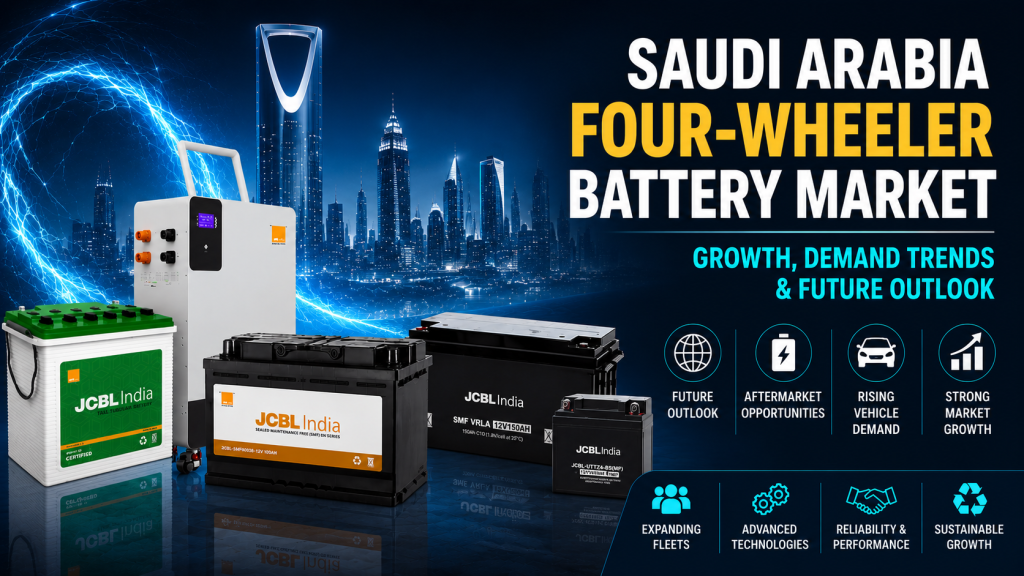
Saudi Arabia is the largest automotive market in the GCC, creating significant opportunities for battery manufacturers, distributors, and aftermarket suppliers. As vehicle ownership continues to grow and transportation activities expand, demand for automotive batteries remains strong across passenger cars, SUVs, pickup trucks, and commercial vehicles.
The Saudi Arabian Four-Wheeler Battery Market is supported by a growing vehicle fleet, rising mobility needs, expanding logistics operations, and recurring battery replacement requirements. With approximately 15.88 million registered and roadworthy vehicles in 2024, the country represents one of the most important automotive battery markets in the Middle East.
What Is Driving Growth in the Saudi Arabia Four-Wheeler Battery Market?
The Saudi Arabia Four-Wheeler Battery Market is growing due to increasing vehicle ownership, expanding logistics activities, recurring battery replacements, and rising demand from passenger and commercial vehicles.
Key Growth Drivers
- Expanding Vehicle Fleet: A growing vehicle population increases battery demand and creates long-term replacement opportunities.
- Rising Personal Mobility: Higher vehicle ownership and urbanization continue to support battery consumption across the country.
- Growth in Transportation and Logistics: Expanding logistics, freight, and e-commerce fleets are driving demand for automotive batteries.
- Climate-Driven Battery Consumption: High temperatures accelerate battery wear, leading to shorter replacement cycles and higher demand.
Understanding Vehicle Battery Demand in Saudi Arabia
Vehicle battery demand in Saudi Arabia is influenced by vehicle ownership levels, operating conditions, replacement cycles, and increasing electrical requirements in modern vehicles.
Demand Factors Shaping the Market
| Demand Factor | Impact on Battery Demand |
| Vehicle Fleet Growth | High |
| Replacement Requirements | High |
| Climate Conditions | High |
| Commercial Vehicle Usage | Medium-High |
| Vehicle Technology Adoption | Medium-High |
The country’s large vehicle population creates a continuous need for battery replacements. Additionally, modern vehicles depend on advanced electrical systems such as infotainment units, navigation systems, sensors, and driver-assistance technologies, increasing battery usage and replacement needs.
Passenger Vehicles Lead the Saudi Arabia Four-Wheeler Battery Market
Passenger vehicles account for a significant share of battery demand due to their large ownership base and recurring replacement requirements.
Why Passenger Vehicles Dominate Demand
- Strong private vehicle ownership across the country.
- Growing urban mobility requirements.
- High popularity of SUVs and pickup trucks.
- Consistent replacement demand throughout vehicle lifecycles.
Passenger cars remain the backbone of Saudi Arabia’s automotive sector. Rising incomes, urbanization, and growing mobility needs continue to support vehicle ownership and battery consumption across both urban and regional markets.
Commercial Vehicles Creating New Growth Opportunities
Commercial vehicles generate strong battery demand due to fleet expansion, intensive usage patterns, and higher replacement requirements.
Passenger vs Commercial Vehicle Battery Demand
| Factor | Passenger Vehicles | Commercial Vehicles |
| Demand Driver | Vehicle ownership | Fleet operations |
| Battery Usage | Daily commuting | Heavy-duty operations |
| Replacement Frequency | Moderate | High |
| Market Opportunity | High volume demand | Strong aftermarket demand |
Key Demand Drivers for Commercial Batteries
- Logistics fleet expansion.
- Growing freight transportation activities.
- Infrastructure and construction projects.
- Longer operating hours and demanding workloads.
Saudi Arabia’s position as a regional logistics hub continues to support growth in commercial vehicle fleets. Increased freight movement, e-commerce expansion, and large-scale development projects are creating additional demand for reliable automotive batteries.
Why Automotive Aftermarket Batteries Are a Key Market Segment
Automotive aftermarket batteries are a critical segment because every vehicle requires battery replacement during its operational life, creating recurring demand beyond new vehicle sales.
Key Factors Supporting Aftermarket Demand
- Large Installed Vehicle Base: Millions of vehicles on the road create continuous replacement opportunities.
- Climate-Related Battery Wear: High temperatures accelerate battery degradation and shorten battery lifespan.
- Expanding Service Networks: Growing numbers of workshops, retailers, and service centers improve battery accessibility.
- Stable Revenue Stream: Replacement batteries generate recurring demand regardless of fluctuations in vehicle sales.
As vehicles age, battery replacement becomes a routine maintenance requirement, making the automotive aftermarket batteries Saudi Arabia segment one of the most resilient areas of the market.
Key Trends Shaping the Car Battery Market Saudi Arabia
- Rising Demand for Maintenance-Free Batteries: Consumers increasingly prefer maintenance-free batteries due to their convenience, reliability, and lower servicing requirements.
- Adoption of Advanced Battery Technologies: Battery manufacturers are introducing advanced solutions that offer improved durability and performance for modern vehicles.
- Increasing Focus on Reliability and Performance: Vehicle owners and fleet operators are prioritizing battery reliability to minimize downtime and maintenance costs.
- Growth of Organized Aftermarket Distribution: Expanding distributor networks and professional service channels are improving product availability throughout Saudi Arabia.
- Expansion of Battery Recycling Initiatives: Growing environmental awareness is encouraging investments in battery collection and recycling programs.
Saudi Arabia Four-Wheeler Battery Market Outlook
The Saudi Arabia Four-Wheeler Battery Market is expected to maintain steady growth as vehicle ownership rises, commercial fleets expand, and replacement demand remains strong.
Outlook Highlights
- Continued growth in vehicle ownership.
- Strong demand from passenger vehicles.
- Expansion of logistics and commercial fleets.
- Rising importance of aftermarket battery sales.
- Increasing adoption of advanced battery technologies.
These factors are expected to support long-term growth and create new opportunities for battery manufacturers, distributors, and aftermarket suppliers operating in Saudi Arabia.
Conclusion
The Saudi Arabia Four-Wheeler Battery Market remains a key segment of the country’s automotive industry, supported by a large vehicle fleet, strong replacement demand, and expanding transportation activities. Passenger vehicles continue to drive battery consumption, while commercial fleets and aftermarket sales provide additional growth opportunities.
As the automotive sector evolves, battery suppliers that focus on reliability, distribution reach, and evolving vehicle requirements will be well positioned to capitalize on the market’s long-term potential.
FAQs
Growth is being driven by increasing vehicle ownership, fleet expansion, replacement demand, and growth in transportation and logistics activities.
A growing vehicle population, challenging climate conditions, and rising use of electronic vehicle systems are increasing battery consumption and replacement needs.
Passenger vehicles account for a significant share of battery demand due to their large ownership base, while commercial vehicles create strong replacement demand.
The aftermarket segment is a major contributor to market revenue because batteries require periodic replacement throughout a vehicle’s lifecycle.
Key trends include rising demand for maintenance-free batteries, adoption of advanced battery technologies, growth of organized aftermarket networks, and increasing battery recycling initiatives.