

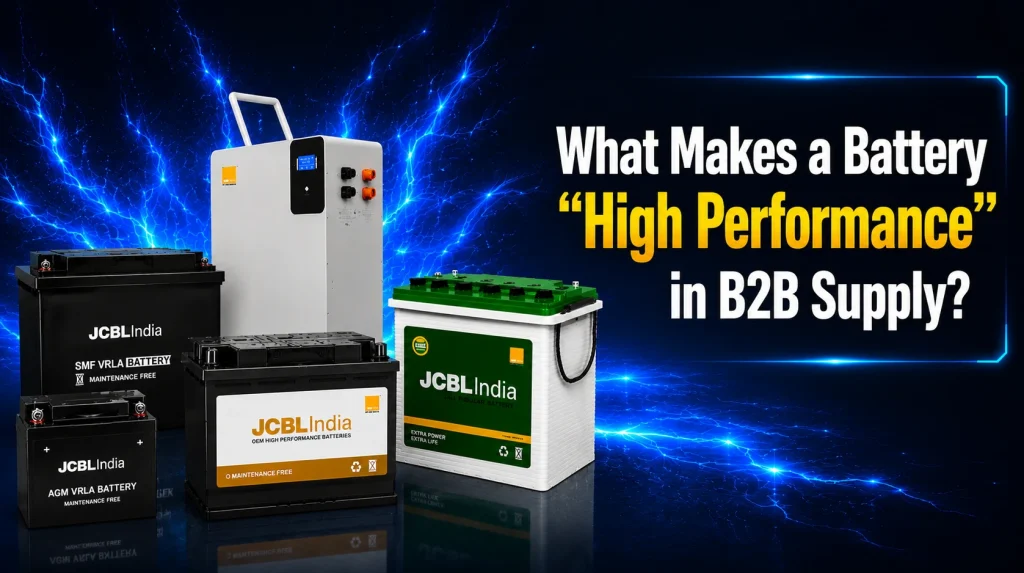
In industrial and commercial operations, battery performance directly impacts equipment reliability, operational uptime, maintenance costs, and overall business efficiency. Whether used in energy storage systems, telecommunications infrastructure, industrial equipment, automotive applications, or backup power solutions, selecting the right battery is critical for long-term performance.
However, a battery is not considered high performance simply because it has a high capacity rating. For B2B buyers, performance is determined by a combination of technical specifications, durability, efficiency, safety, and lifecycle value.
This guide explains what makes a battery high-performance in B2B supply and the key factors businesses should evaluate before making procurement decisions.
What Is a High-Performance Battery?
A high-performance battery is a battery that consistently delivers reliable power, long cycle life, high energy efficiency, fast charging capability, strong safety features, and dependable performance under demanding operating conditions.
In B2B environments, high-performance batteries help reduce downtime, lower maintenance requirements, and improve the total cost of ownership over the battery’s service life.
Why Battery Performance Matters in B2B Applications
For businesses, battery performance affects much more than power availability.
A reliable battery can:
- Minimize operational downtime
- Improve equipment efficiency
- Reduce maintenance and replacement costs
- Support uninterrupted business operations
- Increase long-term return on investment
Industries such as manufacturing, telecommunications, automotive, logistics, renewable energy, and agriculture rely on consistent battery performance to maintain productivity and operational continuity.
Key Characteristics of a High-Performance Battery
- High Energy Density: High energy density allows a battery to store more power in a smaller footprint, making it ideal for applications where space, weight, and efficiency are critical.
- Long Cycle Life: A long cycle life enables a battery to withstand more charge-discharge cycles, reducing replacement frequency and helping businesses lower long-term operating costs.
- Fast Charging Capability: Fast charging capability reduces downtime by enabling batteries to recharge quickly, helping businesses maintain productivity and keep equipment operating efficiently.
- Consistent Power Output: High-performance batteries deliver stable voltage throughout operation, ensuring reliable equipment performance and reducing the risk of unexpected interruptions or shutdowns.
- High Energy Efficiency: Higher energy efficiency minimizes power losses during charging and discharging, reducing energy costs while improving overall system performance and reliability.
- Superior Safety Features: Advanced safety features such as overcharge protection, thermal management, and Battery Management Systems (BMS) help protect equipment, personnel, and operations.
- Temperature Tolerance and Durability: High-performance batteries are designed to perform reliably in extreme temperatures and demanding environments, making them suitable for diverse industrial applications.
- Low Maintenance Requirements: Low-maintenance batteries reduce servicing needs, labor costs, and operational disruptions while helping businesses achieve a lower total cost of ownership.
Technical Specifications Buyers Should Evaluate
1. Capacity (Ah)
Battery capacity, measured in ampere-hours (Ah), indicates the amount of energy a battery can store.
While capacity is important, it should always be evaluated alongside other performance metrics such as cycle life, efficiency, and reliability.
2. Voltage Stability
Voltage stability refers to a battery’s ability to maintain consistent output during operation.
Stable voltage supports:
- Reliable equipment performance
- Improved system efficiency
- Reduced operational disruptions
3. Depth of Discharge (DoD)
Depth of Discharge indicates how much of a battery’s capacity can be safely used before recharging.
Higher DoD can provide:
- Greater usable energy
- Improved operational flexibility
- Better system efficiency
4. Charge Acceptance Rate
Charge acceptance measures how efficiently a battery can absorb incoming charge.
Higher charge acceptance supports:
- Faster charging times
- Improved energy utilization
- Increased equipment availability
5. Internal Resistance
Lower internal resistance generally contributes to:
- Better power delivery
- Reduced energy losses
- Improved battery efficiency
- Enhanced overall performance
How Battery Chemistry Influences Performance
Battery chemistry plays a major role in determining overall performance characteristics.
1. Lithium-Ion Batteries
Lithium-ion batteries are widely used in modern industrial and commercial applications because they offer:
- High energy density
- Long cycle life
- Fast charging capability
- High efficiency
- Low maintenance requirements
These advantages make them suitable for energy storage systems, industrial equipment, electric mobility, and commercial power solutions.
2. AGM Batteries
Absorbent Glass Mat (AGM) batteries are commonly used in:
- Backup power systems
- Telecommunications infrastructure
- UPS applications
Key benefits include:
- Maintenance-free operation
- Reliable performance
- Good vibration resistance
3. Gel Batteries
Gel batteries are often selected for demanding environments due to their:
- Deep-cycle performance
- Durability
- Reliable operation in harsh conditions
They are commonly used in renewable energy systems and industrial applications.
Questions Procurement Teams Should Ask Battery Suppliers
Before selecting a battery supplier, businesses should evaluate more than product specifications alone.
Important questions include:
- What Quality Standards Are Followed?
Verify manufacturing processes, quality controls, and testing procedures.
- Are Performance Test Reports Available?
Reliable suppliers should provide documented performance data and testing results.
- What Warranty Coverage Is Offered?
A strong warranty demonstrates confidence in product quality and reliability.
- Which Certifications Are Available?
Ensure products comply with applicable industry and international quality standards.
- Can the Supplier Ensure Consistent Supply?
Supply chain reliability is essential for maintaining operational continuity.
- Is Technical Support Available?
Responsive technical support can help businesses maximize battery performance and address operational challenges.
Common Mistakes When Evaluating Battery Performance
Mistake #1: Focusing Only on Capacity
A higher Ah rating does not automatically indicate better overall performance. Efficiency, cycle life, safety, and reliability are equally important.
Mistake #2: Ignoring Cycle Life
Choosing a battery with a shorter lifespan can increase replacement costs and long-term expenses.
Mistake #3: Overlooking Operating Conditions
Environmental factors significantly influence battery performance and longevity.
Mistake #4: Prioritizing Lowest Purchase Price
The lowest upfront cost may not deliver the best value. Businesses should evaluate the total cost of ownership rather than the purchase price alone.
How to Identify a Reliable High-Performance Battery Supplier
For businesses sourcing batteries in India and international markets, supplier reliability is just as important as product performance.
A dependable battery supplier should offer:
- Consistent product quality
- Proven manufacturing expertise
- Industry certifications
- Reliable supply capabilities
- Comprehensive warranty support
- Technical assistance and after-sales service
Strong supplier partnerships help businesses maintain uninterrupted operations while ensuring long-term performance and value.
Conclusion
A high-performance battery is defined by much more than its capacity rating. For B2B buyers, true performance includes long cycle life, energy efficiency, fast charging capability, voltage stability, safety, durability, and low maintenance requirements.
When evaluating batteries for industrial, commercial, automotive, telecommunications, renewable energy, or energy storage applications, businesses should focus on measurable performance indicators and supplier reliability rather than price alone.
By selecting high-performance batteries from trusted manufacturers and suppliers such as JCBL India Batteries, businesses can reduce downtime, improve operational efficiency, and achieve a lower total cost of ownership throughout the battery’s lifecycle. With a focus on quality, reliability, and consistent supply, JCBL India Batteries helps businesses meet demanding power requirements across diverse industries.
FAQs
A high-performance battery delivers reliable power, long cycle life, high energy efficiency, fast charging, and strong safety performance in demanding operating conditions.
Battery performance is typically measured using capacity, cycle life, energy efficiency, charging speed, voltage stability, and overall durability.
A longer cycle life reduces replacement frequency, lowers maintenance costs, and improves the total return on investment over the battery’s lifespan.
Not always. While a higher Ah rating indicates greater energy storage, factors such as efficiency, cycle life, safety, and reliability also determine overall performance.
Businesses should evaluate product quality, industry certifications, testing standards, warranty coverage, technical support, and supply chain reliability.