

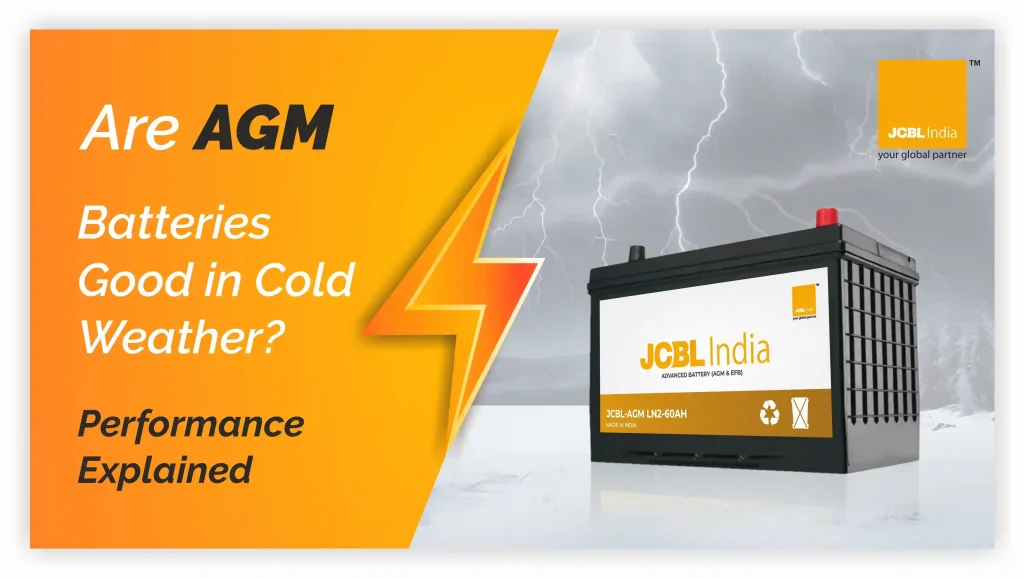
Cold weather can be tough on any battery. As temperatures drop, the chemical reactions inside the battery slow down, making it harder to deliver the power needed to start an engine or support electrical systems. This is one of the main reasons battery-related problems become more common during winter.
Whether you’re starting your car on a freezing morning or operating equipment in low temperatures, battery performance becomes increasingly important when the weather turns cold.
A common question among vehicle owners, fleet operators, and equipment operators is:
Are AGM batteries good in cold weather?
The short answer is yes.
AGM (Absorbent Glass Mat) batteries are widely recognized for their strong cold-start performance, reliable power delivery, and ability to operate efficiently in low-temperature conditions. Their advanced design helps them maintain performance when many conventional batteries begin to struggle.
In this guide, we’ll explain how cold weather affects batteries, why AGM batteries perform well in winter conditions, and what makes them a preferred choice for modern vehicles and demanding applications.
Quick Answer: Are AGM Batteries Good in Cold Weather?
Yes. AGM batteries generally perform well in cold weather because they provide strong cold-cranking power, stable voltage delivery, and reliable starting performance in low temperatures. Compared with many conventional flooded batteries, AGM batteries are often better equipped to handle winter conditions, making them a dependable choice for vehicles, start-stop systems, and other applications that require consistent power.
Quick Facts About AGM Batteries in Cold Weather
- AGM batteries typically provide stronger cold-cranking performance than many conventional flooded batteries.
- Their sealed design helps improve reliability in harsh weather conditions.
- AGM batteries are commonly used in start-stop vehicles because they can handle frequent charge and discharge cycles.
- AGM batteries require minimal maintenance compared to traditional flooded batteries.
- Keeping an AGM battery fully charged helps maintain optimal winter performance.
Why Cold Weather Affects Battery Performance
Every battery relies on chemical reactions to generate electricity. When temperatures fall, those reactions naturally slow down.
As a result, the battery produces less available power precisely when the vehicle needs more energy to start.
Winter conditions create several challenges simultaneously:
- Engine oil becomes thicker, making the engine harder to turn over.
- Heaters, defrosters, lights, and other accessories increase immediate power demand.
- Cold temperatures reduce overall battery efficiency.
- Charging performance can decrease during short winter trips.
This combination of lower battery output and higher power demand explains why weak batteries often fail during cold weather.
In many cases, a battery that appears to function normally during summer may struggle once temperatures begin to drop.
What Makes AGM Batteries Different?
AGM batteries differ from conventional flooded lead-acid batteries in the way they store and manage electrolyte.
Instead of using free-flowing liquid electrolyte, AGM batteries use highly absorbent glass mats positioned tightly between the battery plates. These mats hold the electrolyte securely in place.
This unique design offers several advantages:
- Lower internal resistance
- Faster energy delivery
- Improved vibration resistance
- Better charge acceptance
- Maintenance-free operation
- Reduced risk of electrolyte leakage
These characteristics help AGM batteries perform more consistently under demanding operating conditions, including cold weather.
AGM Battery Performance in Cold Weather
The unique construction of AGM technology directly contributes to better performance when temperatures fall.
Strong Cold-Cranking Power
Cold Cranking Amps (CCA) measure a battery’s ability to start an engine in cold temperatures.
The higher the CCA rating, the better the battery can deliver the high burst of power needed for engine ignition during winter conditions.
AGM batteries are known for providing strong cold-cranking performance, helping engines start more reliably on freezing mornings.
Stable Power Delivery
Winter driving places additional demands on a vehicle’s electrical system.
Features such as:
- Cabin heaters
- Defrosters
- Heated seats
- Exterior lighting
- Infotainment systems
all require power simultaneously.
AGM batteries help maintain stable voltage under these conditions, reducing the risk of noticeable performance drops.
Faster Energy Response
Because AGM batteries have lower internal resistance than many conventional batteries, they can respond quickly when power is needed.
This rapid power delivery is especially valuable during engine ignition, when immediate electrical output is especially important for reliable starting.
Better Reliability During Winter
In regions that regularly experience freezing temperatures, AGM batteries are often preferred because they maintain stronger starting performance and recover more efficiently after repeated cold starts.
For drivers who rely on their vehicles daily during winter, this added reliability makes a significant difference.
In real-world winter conditions, drivers often notice that AGM batteries maintain more consistent starting performance after overnight exposure to freezing temperatures compared with many conventional flooded batteries.
AGM vs Conventional Flooded Batteries in Winter
While both AGM and conventional flooded batteries are designed to store and deliver electrical energy, their cold-weather performance can differ significantly.
| Performance Factor | Conventional Flooded Battery | AGM Battery |
| Cold Start Performance | More affected by low temperatures | Stronger cold-cranking performance |
| Power Delivery | May experience larger voltage drops | More stable voltage output |
| Recharge Acceptance | Slower recharge rates in cold conditions | Faster charge acceptance |
| Maintenance | May require periodic maintenance | Maintenance-free design |
| Reliability in Winter | Performance can decline more noticeably | Better consistency in low temperatures |
| Vibration Resistance | Standard construction | Enhanced durability and vibration resistance |
Summary
In general, AGM batteries offer stronger cold-start performance, more stable power delivery, faster charge acceptance, and lower maintenance requirements than conventional flooded batteries. These advantages make them a popular choice for winter driving and demanding operating environments.
Charging AGM Batteries in Cold Weather
Even though AGM batteries perform well in low temperatures, proper charging remains important during winter.
Cold weather can reduce charging efficiency because internal battery resistance naturally increases as temperatures fall.
Best Practices for Charging AGM Batteries in Winter
Keep the Battery Fully Charged
A fully charged battery performs significantly better in cold weather than a partially discharged battery.
Use an AGM-Compatible Charger
Modern smart chargers designed specifically for AGM batteries can help ensure proper charging performance and battery longevity.
Avoid Long-Term Deep Discharge
Leaving a battery discharged for extended periods can negatively affect performance and lifespan.
Inspect Battery Connections
Dirty or corroded terminals can increase electrical resistance and reduce cold-start performance.
Regular inspection and cleaning help maintain efficient power transfer.
What Makes a Good AGM Battery for Cold Weather?
Not all batteries are designed for the same operating conditions.
If you’re selecting an AGM battery for winter use, consider the following factors:
Cold Cranking Amps (CCA)
A higher CCA rating generally improves starting performance in freezing temperatures.
Reserve Capacity
Reserve capacity determines how long the battery can continue supplying power if the charging system becomes unavailable.
Build Quality
High-quality AGM batteries typically provide more consistent performance and longer service life.
Application Requirements
Passenger vehicles, commercial trucks, fleet vehicles, industrial equipment, and backup power systems all have different power requirements.
Choosing the correct battery specification is essential for optimal performance.
Why AGM Batteries Are Preferred for Start-Stop Vehicles in Winter
Modern start-stop vehicles place additional demands on batteries.
These systems automatically shut down and restart the engine during operation to improve fuel efficiency.
In winter conditions, this creates additional challenges because the battery must support:
- Frequent engine restarts
- Heating systems
- Defrosters
- Lighting systems
- Other onboard electronics
AGM batteries are commonly used in start-stop vehicles because they can handle repeated charge and discharge cycles more effectively than many conventional battery designs.
Their ability to recharge quickly and deliver reliable power makes them particularly suitable for these applications.
Common Myths About AGM Batteries in Cold Weather
Myth 1: AGM Batteries Stop Working in Extremely Cold Temperatures
Fact: All batteries experience some performance reduction as temperatures drop. However, AGM batteries are generally known for maintaining stronger performance in cold conditions than many conventional flooded batteries.
Myth 2: AGM Batteries Require Extra Winter Maintenance
Fact: AGM batteries are sealed and maintenance-free under normal operating conditions. Unlike traditional flooded batteries, they do not require regular water top-ups.
Myth 3: AGM Batteries Are Only Used in Premium Vehicles
Fact: AGM batteries are widely used across passenger vehicles, commercial fleets, motorcycles, industrial equipment, backup power systems, and energy storage applications.
Key Takeaways
- AGM batteries generally perform well in cold weather.
- They provide strong cold-cranking capability and stable voltage delivery.
- AGM batteries are commonly used in start-stop vehicles.
- Keeping the battery fully charged improves winter performance.
- AGM technology is often preferred for demanding cold-weather applications.
- AGM batteries typically require less maintenance than conventional flooded batteries.
Conclusion
So, are AGM batteries good in cold weather?
Yes. AGM batteries are widely recognized for their strong cold-start performance, stable voltage delivery, and dependable operation in low temperatures. Their design helps address many of the challenges commonly associated with winter battery performance, making them a practical choice for modern vehicles and demanding applications.
Whether you drive in regions with occasional winter conditions or regularly face freezing temperatures, an AGM battery can provide improved reliability, faster starts, and more consistent performance compared to many conventional battery options.
For businesses, fleet operators, and vehicle owners looking for dependable battery solutions, AGM technology remains one of the most trusted choices for cold-weather applications. JCBL India Batteries offers a range of advanced AGM battery solutions designed to deliver reliable performance across diverse operating environments.
Related AGM Battery Guides
To learn more about AGM battery performance in different winter conditions, explore these detailed comparisons:
- AGM vs Flooded Battery Cold Weather Performance: Which Performs Better?
- AGM vs Lead Acid Battery in Cold Weather: Understanding the Difference
- AGM vs Lithium Battery in Cold Weather: Which Battery Is Better for Winter Conditions?
FAQs
Yes. AGM batteries generally perform better in cold weather because they deliver higher cold-cranking power, maintain stable voltage, and are less affected by low temperatures than many conventional flooded batteries.
Yes. AGM batteries are designed to provide strong starting power in low temperatures, helping engines start more reliably during winter conditions.
Cold weather does not usually damage AGM batteries. However, extremely low temperatures can reduce battery capacity and starting performance if the battery is not fully charged.
AGM batteries do not require special winter maintenance, but using an AGM-compatible charger and keeping the battery fully charged can help maintain optimal performance in cold weather.
AGM batteries can operate in very low temperatures, but like all lead-acid batteries, their available capacity decreases as temperatures drop. Keeping the battery fully charged helps maintain performance during extreme cold weather.
Yes. AGM batteries are commonly used in start-stop vehicles because they can handle frequent engine starts, rapid charging cycles, and higher electrical demands more effectively than many conventional batteries.