

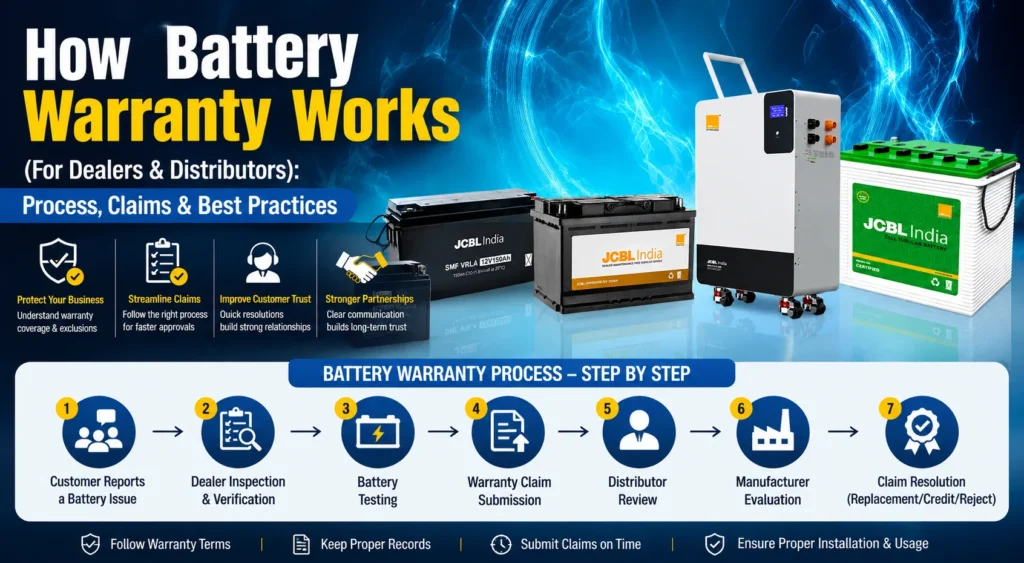
Battery warranties play an important role in the automotive aftermarket. For dealers and distributors, understanding how the warranty process works is essential for handling customer concerns, reducing claim delays, and maintaining smooth business operations. Since battery warranties involve manufacturers, distributors, dealers, and end users, a clear understanding of each stakeholder’s role helps improve efficiency across the supply chain.
This guide explains how battery warranties generally work, the steps involved in processing a warranty claim, common reasons claims may be rejected, and best practices for dealers and distributors. While warranty policies vary by manufacturer and battery type, the process outlined here reflects common industry practices.
How Does a Battery Warranty Work?
A battery warranty is a manufacturer’s assurance that a battery is free from manufacturing or material defects for a specified warranty period, subject to the terms and conditions of the warranty policy. If a customer reports a battery issue, the dealer typically performs an initial inspection and testing before submitting a warranty claim. The distributor coordinates the claim with the manufacturer, who evaluates whether the battery qualifies for warranty support. Depending on the warranty terms and assessment, the claim may result in a replacement, credit, or rejection.
What Is a Battery Warranty?
A battery warranty outlines the conditions under which a manufacturer may provide support if a battery experiences defects related to manufacturing or materials during the applicable warranty period. It also defines the responsibilities of the dealer, distributor, and customer during the claim process.
It is important to distinguish a battery warranty from the expected service life of a battery. A battery may reach the end of its usable life due to normal wear, operating conditions, or maintenance practices without qualifying for warranty support.
What Is Generally Covered vs. Not Covered
| Typically Covered | Typically Not Covered |
| Manufacturing defects | Physical or accidental damage |
| Material defects | Improper installation |
| Premature failure under normal operating conditions | Overcharging or undercharging |
| Product defects covered by warranty terms | Deep discharge due to misuse |
| Tampering or unauthorized modifications |
Coverage varies by manufacturer and warranty policy.
How the Battery Warranty Process Works
Although procedures differ among manufacturers, the battery warranty process generally follows these steps.
Step 1: Customer Reports a Battery Issue
The process begins when a customer contacts the dealer regarding a battery that is not performing as expected.
Step 2: Dealer Performs Initial Inspection
The dealer verifies the purchase details and conducts a visual inspection. They may also check for obvious signs of damage, incorrect installation, or misuse before proceeding with further evaluation.
Step 3: Battery Testing
The battery is typically tested using appropriate diagnostic equipment. Depending on the application, testing may include voltage checks, state of charge, load testing, or other manufacturer-recommended procedures.
Step 4: Warranty Claim Submission
If the battery appears eligible under the warranty policy, the dealer submits the required documentation and test results to the distributor or the manufacturer’s authorized service channel.
Step 5: Distributor Review
The distributor reviews the claim, verifies the documentation, and coordinates with the manufacturer where required. This helps ensure the claim complies with the applicable warranty guidelines.
Step 6: Manufacturer Evaluation
The manufacturer or authorized technical team assesses the returned battery to determine whether the issue falls within the warranty terms.
Step 7: Claim Resolution
Based on the evaluation, the warranty claim may result in:
- Battery replacement (where applicable)
- Credit or settlement according to the warranty policy
- Claim rejection if the issue falls outside the warranty terms
Roles and Responsibilities in the Battery Warranty Process
Dealer Responsibilities
Dealers are generally the first point of contact for warranty-related concerns. Their responsibilities may include:
- Verifying proof of purchase
- Inspecting the battery
- Performing preliminary testing
- Collecting warranty documentation
- Submitting claims accurately
- Communicating updates to customers
Proper documentation at this stage can help reduce processing delays.
Distributor Responsibilities
Distributors act as the link between dealers and manufacturers. Their responsibilities often include:
- Reviewing warranty claims
- Verifying submitted documents
- Coordinating with manufacturers
- Managing replacement inventory where applicable
- Providing claim status updates to dealers
Efficient coordination helps streamline warranty handling across the distribution network.
Manufacturer Responsibilities
Manufacturers establish the warranty policy and determine claim eligibility. They may:
- Define warranty terms and conditions
- Evaluate returned batteries
- Investigate reported defects
- Approve or reject warranty claims
- Issue replacement products or credits according to the warranty policy
Types of Battery Warranty
Warranty structures vary across manufacturers, but two common approaches are widely used.
1. Free Replacement Warranty
During the free replacement period, an eligible battery that meets the manufacturer’s warranty conditions may be replaced without additional product cost, subject to the applicable warranty policy.
2. Pro-rata Warranty
Some manufacturers also offer a pro-rata warranty after the free replacement period. Under this approach, the customer may receive proportional value based on the remaining warranty period and pay the balance as defined in the manufacturer’s policy.
Because warranty structures differ by brand and battery category, dealers and distributors should always refer to the specific manufacturer’s warranty documentation.
Documents Commonly Required for a Battery Warranty Claim
The exact documentation requirements vary, but manufacturers commonly request:
- Purchase invoice
- Warranty card or registration details (where applicable)
- Battery serial number or identification code
- Customer information
- Vehicle details (if applicable)
- Battery test report
- Warranty claim form
- Supporting photographs, if requested
Submitting complete documentation can help minimize unnecessary claim delays.
Common Reasons Battery Warranty Claims May Be Rejected
Not every battery issue is caused by a manufacturing defect. Common reasons a warranty claim may not qualify include:
- Incorrect battery selection for the application
- Improper installation
- Vehicle charging system faults
- Overcharging or undercharging
- Deep discharge caused by misuse
- Physical or accidental damage
- Water ingress or external contamination
- Missing purchase documentation
- Tampered or missing identification labels
- Unauthorized repairs or modifications
Understanding these factors can help dealers identify issues before submitting a claim.
Best Practices for Dealers & Distributors
A structured warranty process benefits both businesses and customers. Consider these best practices:
- Verify battery compatibility before installation.
- Follow manufacturer-recommended testing procedures.
- Register warranty information accurately at the time of sale.
- Maintain organized digital or physical warranty records.
- Train staff on manufacturer-specific warranty policies.
- Submit complete documentation with every claim.
- Educate customers on proper battery installation, maintenance, and usage practices.
- Monitor recurring warranty cases to identify patterns that may require further investigation.
Conclusion
Battery warranty management is a collaborative process involving dealers, distributors, and manufacturers. While warranty policies differ across brands, following standardized inspection procedures, maintaining accurate documentation, and understanding manufacturer requirements can help improve claim efficiency. For dealers and distributors, a well-organized warranty process supports better customer service, smoother operations, and stronger relationships throughout the battery supply chain.
Disclaimer: The information in this article is intended as a general guide to how battery warranty processes commonly work within the automotive and industrial battery supply chain. Warranty terms, coverage, claim procedures, and documentation requirements vary by manufacturer, battery type, and region. Dealers and distributors should always refer to the applicable manufacturer’s warranty policy and official guidelines for product-specific requirements.
FAQs
A battery warranty claim generally begins with a dealer inspection and battery testing. If the battery appears eligible under the warranty policy, the dealer submits the claim to the distributor or manufacturer for evaluation. The final decision is based on the manufacturer’s warranty terms.
Battery warranties generally cover manufacturing or material defects during the applicable warranty period. Coverage varies by manufacturer, battery type, and warranty policy.
Claims may not qualify if the battery shows signs of improper installation, misuse, overcharging, physical damage, unauthorized modifications or if required documentation is unavailable.
Manufacturers commonly request a purchase invoice, warranty details, battery identification number, test report, customer information, and a completed warranty claim form. Requirements may vary by manufacturer.
Dealers typically inspect the battery, perform preliminary testing, collect the required documentation, submit the warranty claim, and communicate updates to the customer throughout the process.