

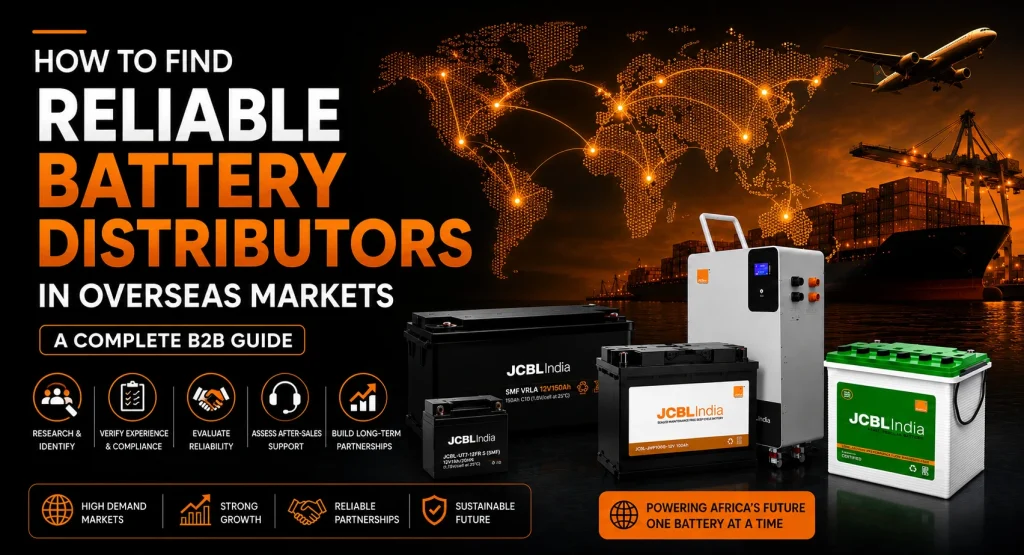
Reliable overseas battery distributors can be identified by evaluating their battery industry experience, import history, compliance knowledge, local market presence, after-sales support, and financial credibility. The best distributors typically have established regional networks, warehouse infrastructure, and experience handling lithium-ion, telecom, solar, or industrial battery systems.
As global demand for energy storage, telecom backup, EV infrastructure, and industrial batteries grows, choosing the right international distributor has become critical for battery manufacturers and exporters.
Why the Right Battery Distributor Matters
A distributor is not just a reseller. In overseas markets, they represent your brand, manage customer relationships, support local logistics, and help navigate regional regulations.
The right battery distributor can help manufacturers:
- Enter new markets faster
- Improve local customer trust
- Handle battery compliance requirements
- Reduce logistics and operational risks
- Strengthen after-sales support
- Scale long-term sales growth
A poor distributor, however, can lead to delayed payments, weak customer service, shipment issues, and reputational damage.
What Makes a Battery Distributor Reliable?
1. Industry Experience
Reliable distributors usually specialize in battery-related industries such as:
- Solar energy storage
- Telecom backup systems
- UPS infrastructure
- Industrial power solutions
- Lithium-ion batteries
- EV charging systems
Battery products require technical understanding, especially in installation, maintenance, and warranty handling. Distributors with relevant experience are better equipped to support customers and grow regional sales.
2. Compliance and Certification Knowledge
Battery exports involve strict international regulations. A qualified distributor should understand:
- UN38.3 transportation testing
- IEC battery standards
- CE certification
- RoHS compliance
- Dangerous goods shipping regulations
This is especially important for lithium-ion battery exports, where compliance failures can cause customs delays, shipment rejection, or regulatory penalties.
3. Local Market Presence
Strong distributors typically have:
- Local warehousing capability
- Existing dealer networks
- Relationships with industrial buyers
- Technical support teams
- Regional sales coverage
A visible market presence indicates operational stability and improves customer confidence.
4. Financial and Operational Stability
Before entering a distribution agreement, exporters should verify:
- Import-export history
- Payment reliability
- Trade references
- Business registration
- Existing battery partnerships
Financially unstable distributors increase commercial risk, particularly in international trade.
Step-by-Step Process to Find Reliable Overseas Battery Distributors
1. Identify the Right Overseas Markets
Start by selecting markets where your battery products match local demand.
For example:
- Africa has strong demand for telecom and solar batteries
- Southeast Asia is growing rapidly in lithium-ion and EV batteries
- The Middle East requires industrial backup and UPS systems
- Europe prioritizes certified energy storage solutions
Analyze battery import trends, infrastructure growth, competition, and local regulations before selecting distributors.
2. Use Industry-Specific Sourcing Channels
The best battery distributors are rarely found through generic searches alone.
Effective sourcing channels include:
- International Battery Trade Shows: Battery and energy exhibitions help manufacturers connect directly with established distributors and regional buyers.
- LinkedIn and B2B Networking: Professional platforms help evaluate company size, industry specialization, and regional presence.
- Industry Associations: Renewable energy, telecom, and battery associations often provide access to verified distributors.
- Export Promotion Agencies: Trade councils and export organizations can assist with distributor identification and market intelligence.
3. Verify Import History and Market Activity
Import records are one of the most effective ways to validate distributor credibility.
A distributor actively importing battery products usually demonstrates:
- Existing market demand
- Operational scale
- Consistent business activity
- Industry specialization
Shipment history can also reveal which battery categories and brands the distributor already handles.
4. Conduct Distributor Due Diligence
Before signing agreements, manufacturers should conduct structured verification.
Essential Distributor Verification Checklist
- Business registration validation
- Tax and licensing verification
- Warehouse assessment
- Customer references
- Financial background checks
- Battery compliance capability
- Technical support evaluation
Skipping due diligence significantly increases fraud and operational risks.
5. Start With a Pilot Shipment
Instead of offering immediate exclusivity, begin with a small trial order.
Pilot programs help evaluate:
- Communication responsiveness
- Inventory management
- Technical support quality
- Payment discipline
- Local sales capability
This reduces long-term partnership risks while providing real market feedback.
6. Red Flags to Avoid
Avoid battery distributors that:
- Lack of battery industry experience
- Refuse verification requests
- Have no physical infrastructure
- Show poor understanding of battery regulations
- Push for exclusivity too early
- Have inconsistent communication
- Cannot provide customer references
These warning signs often indicate weak operational capability or elevated business risk.
Key Questions to Ask Overseas Battery Distributors
Before finalizing partnerships, ask:
- Which battery categories do you currently distribute?
- What industries generate most of your sales?
- Do you handle lithium battery compliance?
- What technical support services do you provide?
- How do you manage warranty claims?
- Which regions do you actively cover?
- Can you share customer references?
- What warehousing infrastructure do you maintain?
These discussions help manufacturers assess whether the distributor can support long-term growth.
Conclusion
Finding reliable battery distributors in overseas markets requires more than identifying companies willing to place orders. Successful international battery distribution depends on technical expertise, compliance knowledge, operational infrastructure, financial reliability, and local market capability.
Manufacturers like JCBL India Batteries invest in market research, distributor verification, and long-term relationship building are far more likely to achieve sustainable international growth.
In today’s competitive global battery industry, choosing the right overseas distributor is one of the most important decisions for successful market expansion.
FAQs
Verify an overseas battery distributor by checking their import history, business registration, customer references, warehouse facilities, financial stability, and battery compliance expertise.
Battery distributors should understand UN38.3, IEC standards, CE certification, RoHS compliance, and dangerous goods transportation regulations.
Choosing the wrong battery distributor can result in delayed payments, customs issues, poor after-sales support, warranty disputes, shipment delays, and reputational damage.
Africa, Southeast Asia, the Middle East, and Latin America currently show high demand for telecom batteries, lithium-ion batteries, solar storage systems, and industrial backup power solutions.
After-sales support is important because battery systems often require installation assistance, maintenance, warranty handling, and technical troubleshooting.