

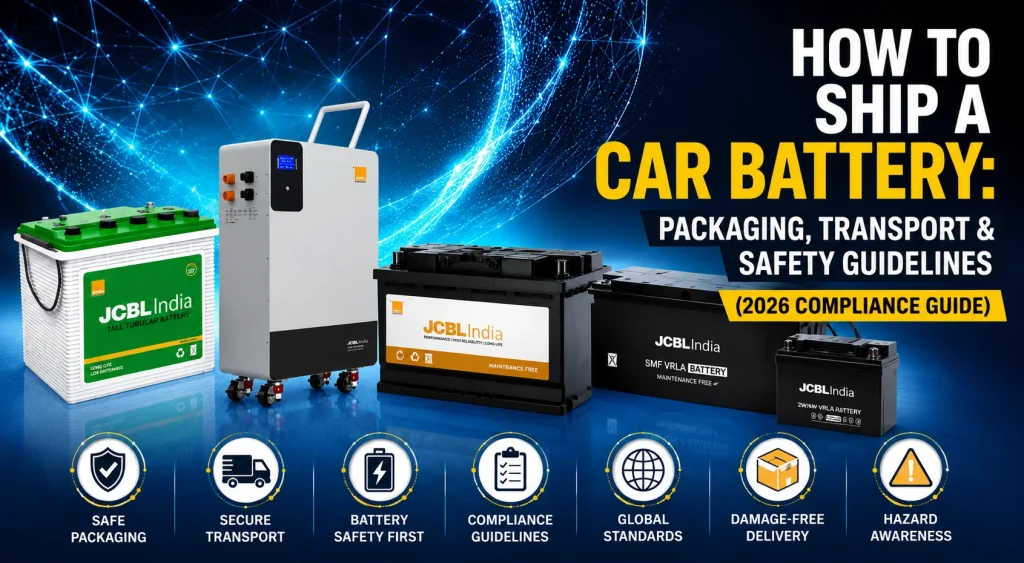
Shipping a car battery requires strict handling because it is classified as hazardous cargo in most global transport systems. Automotive batteries contain corrosive materials and stored electrical energy, which makes improper packaging or transport a serious safety and compliance risk.
Whether you are a manufacturer, exporter, distributor, or logistics provider, understanding how to ship a car battery safely ensures regulatory compliance, reduced damage risk, and uninterrupted cross-border trade.
This guide explains battery packaging, transport methods, safety practices, and regulatory frameworks in a clear, practical format for both domestic (India and global markets) and international shipping.
How Do You Ship a Car Battery Safely?
To ship a car battery safely:
- Inspect the battery for damage, leakage, or swelling
- Insulate terminals to prevent short circuits
- Use UN-compliant, leak-resistant packaging
- Secure the battery to avoid movement during transit
- Apply hazardous goods labels and orientation marks
- Prepare required transport documentation (SDS, invoice, DG forms if applicable)
- Follow applicable regulations such as UN 38.3, ADR, IATA, or IMDG depending on transport mode
Why Car Batteries Are Treated as Hazardous Goods
Car batteries, especially lead-acid and lithium-based types, are regulated because they pose the following risks:
- Risk of acid leakage (corrosive hazard)
- Electrical short-circuit and fire risk
- Heavy metal contamination concerns
- Pressure and thermal instability in transit
Because of these risks, they fall under dangerous goods classification in global logistics systems.
Key Regulations for Shipping Car Batteries
Battery shipping compliance depends on the transport mode and destination. The most widely used frameworks include:
| Regulation | Applicable Mode | Region/Use |
| UN 38.3 | All modes | Mandatory testing for lithium batteries |
| ADR | Road transport | Europe and cross-border road freight |
| IATA DGR | Air transport | Global air cargo restrictions |
| IMDG Code | Sea freight | International maritime shipping |
| DOT (US 49 CFR) | Road/air/sea (USA) | Domestic US hazardous goods rules |
For exporters and B2B suppliers in India, compliance with UN standards + IATA/IMDG guidelines is critical for international shipments.
Step-by-Step Process: How to Ship a Car Battery
Step 1: Inspect Battery Condition
Before shipping, ensure the battery is:
- Free from cracks or casing damage
- Not leaking electrolyte
- Structurally stable (no swelling or deformation)
- Clean and safe for handling
Damaged batteries should never enter transport systems.
Step 2: Insulate Battery Terminals
Terminal protection prevents accidental short circuits during handling or stacking.
Common methods:
- Non-conductive tape
- Protective terminal caps
- Insulating covers approved for industrial use
This step is mandatory under most hazardous goods guidelines.
Step 3: Use Approved Packaging Materials
Packaging must withstand vibration, pressure, and possible leakage.
Recommended packaging structure:
- Strong corrugated or UN-certified outer box
- Absorbent material (for lead-acid batteries if required)
- Cushioning to absorb shocks
- Upright positioning support
- Internal separators to prevent movement
For bulk shipments, use palletized packaging with shrink wrap and strapping for load stability.
Step 4: Label According to Hazard Classification
Proper labeling ensures safe handling across logistics chains.
Typical labels include:
- Hazard class labels (corrosive or battery hazard)
- Orientation arrows (“This Side Up”)
- Handling instructions
- UN number marking (where applicable)
Incorrect labeling is one of the most common causes of shipment rejection.
Step 5: Prepare Shipping Documentation
Documentation varies by destination but generally includes:
- Commercial invoice
- Packing list
- Safety Data Sheet (SDS)
- Dangerous Goods Declaration (if required)
- Export/import compliance documents
For international shipments, documentation accuracy directly affects customs clearance speed.
Packaging Standards for Safe Battery Transport
Effective packaging is not just about protection—it is about regulatory compliance.
Key requirements:
- Use rigid, impact-resistant outer packaging
- Prevent battery movement inside the box
- Maintain upright orientation wherever possible
- Avoid contact with conductive materials
- Protect against moisture and temperature exposure
- Ensure pallet stability for bulk loads
In industrial logistics, packaging failure is a leading cause of battery-related shipment damage.
Transport Modes & Safety Considerations
Different transport methods require different handling rules:
Road Transport (Domestic – India & regional markets)
- Most flexible option
- Must follow hazardous goods road safety rules
- Secure load fastening required
Air Transport (IATA regulated)
- Strictest regulations
- Limited battery quantity per shipment
- Mandatory compliance with IATA Dangerous Goods Regulations
Sea Freight (IMDG Code)
- Most cost-effective for bulk exports
- Requires proper container segregation
- Longer transit times require enhanced packaging durability
Rail Transport
- Regionally used in domestic freight networks
- Requires vibration-resistant packaging and load stability
India vs International Shipping Requirements
Domestic Shipping (India)
- Governed by road transport hazardous goods rules
- Limited documentation compared to exports
- Courier restrictions may apply depending on carrier
International Shipping
- Must comply with UN 38.3 certification (especially lithium batteries)
- Requires IATA/IMDG compliance depending on mode
- Customs documentation is mandatory
- Packaging standards are more stringent
Exporters in India must align with global standards to avoid shipment rejection at destination ports.
Common Mistakes in Car Battery Shipping
Avoid these frequent compliance failures:
- Shipping damaged or untested batteries
- Ignoring terminal insulation
- Using non-certified packaging materials
- Missing hazard labels or UN markings
- Incomplete shipping documentation
- Poor palletization causing movement during transit
- Overlooking carrier-specific rules
Even a single compliance error can delay or reject international shipments.
Car Battery Shipping Checklist (Pre-Dispatch)
Before shipping, confirm:
- Battery inspected and undamaged
- Terminals fully insulated
- Proper UN-compliant packaging used
- Shock-absorbing material added
- Hazard labels correctly applied
- Documentation completed (SDS, invoice, DG forms if needed)
- Pallet secured for bulk shipments
- Carrier and destination rules verified
This checklist reduces risk and ensures smoother customs clearance.
Conclusion
Shipping a car battery safely requires a combination of proper packaging, regulatory compliance, accurate documentation, and transport-specific handling practices.
For manufacturers, exporters, and automotive supply chain operators in India and global markets, aligning with UN 38.3, ADR, IATA, and IMDG guidelines ensures safe delivery, reduced risk, and smooth customs clearance.
A standardized shipping process not only protects the product but also strengthens reliability across the automotive supply chain.
FAQs
Yes. Car batteries can be shipped internationally if they comply with UN 38.3 testing requirements and follow IATA or IMDG dangerous goods regulations, depending on transport mode.
Yes. Batteries must be shipped in durable, leak-resistant packaging with insulated terminals, cushioning, and proper labeling to prevent short circuits and leakage.
UN 38.3 is a mandatory safety testing standard for lithium batteries to ensure they can safely withstand conditions like vibration, pressure, and temperature changes during transport.
Common documents include a commercial invoice, packing list, Safety Data Sheet (SDS), and dangerous goods declaration for regulated shipments.
Yes, but only under strict IATA Dangerous Goods Regulations, with limitations on quantity, packaging, and certification.