

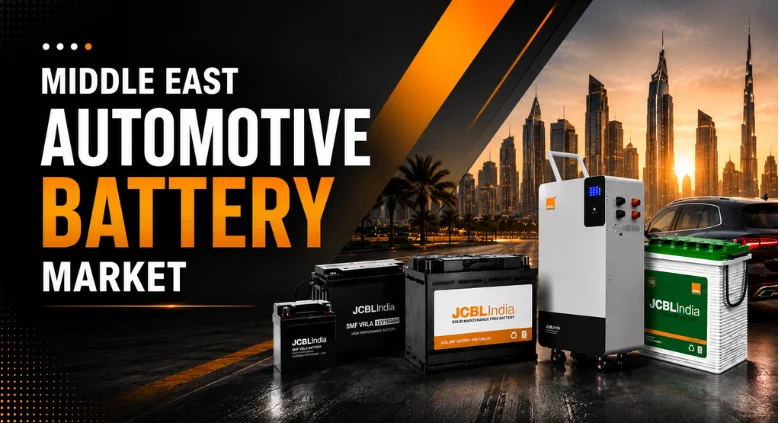
The Middle East automotive battery market is driven by high vehicle demand and harsh climate conditions, leading to frequent battery replacements and strong growth in both conventional and EV battery segments.
The market is projected to reach approximately $10.96 billion by 2031, growing at a CAGR of around 7.4%, making it a lucrative destination for battery suppliers targeting long-term growth.
Key Takeaways
- The Middle East automotive battery market is growing steadily, driven by high vehicle ownership and extreme climate conditions.
- Frequent battery replacement (every 2–3 years) makes the aftermarket the largest and most profitable segment.
- Lead-acid batteries dominate, while lithium-ion batteries are the fastest-growing segment due to EV adoption.
- Saudi Arabia and the UAE offer high-value opportunities, while Egypt serves as a volume-driven entry point.
- Success in this market depends on the right product mix, regulatory compliance, and strong local distribution networks.
Middle East Automotive Battery Market Overview
The Middle East automotive battery market is characterized by a high dependency on imports, a dominant replacement segment, and growing diversification toward lithium-ion technologies.
Key Market Highlights:
- Market Size (2026 est.): Steady growth with strong aftermarket demand
- Forecast Growth: ~7.4% CAGR through 2031
- Dominant Segment: Lead-acid batteries (~39% share)
- Fastest Growing Segment: Lithium-ion batteries
- Primary Demand Driver: Replacement market due to short battery lifespan
Rechargeable batteries dominate the market, supported by continuous vehicle usage and limited public transport reliance in several GCC countries.
Key Factors Driving Market Growth
The Middle East automotive battery market is driven by high vehicle ownership, extreme heat-driven replacement demand, rising EV adoption, and growing energy storage needs.
- Rising Vehicle Ownership Across GCC: Vehicle demand is increasing in Saudi Arabia and the UAE due to urbanization and higher income levels, directly boosting battery demand.
- High Replacement Cycles Due to Extreme Heat: Extreme heat reduces battery lifespan to 2–3 years, leading to frequent replacements and a strong aftermarket.
- Growing EV Adoption & Lithium Battery Demand: Government initiatives are accelerating EV adoption, increasing demand for lithium-ion batteries.
- Increasing Demand for Energy Storage Solutions: Batteries are also used for solar storage, backup power, and grid support, expanding overall market demand.
Expert Insight (Climate Impact): Ambient temperatures exceeding 50°C in GCC countries can reduce battery lifespan by up to 50% compared to European climates, making the region one of the most replacement-driven automotive battery markets globally.
Country-Wise Market Opportunities
The Middle East automotive battery market offers diverse opportunities, with each country differing in demand scale, pricing, and entry strategy.
- Saudi Arabia: Largest and highest-demand market, driven by strong vehicle sales and frequent battery replacements.
- United Arab Emirates (UAE): Premium, import-driven market with higher margins and strong demand for performance batteries.
- Qatar & Oman: Smaller but stable markets with consistent demand from steady vehicle usage.
- Egypt (Strategic Entry Point): Cost-sensitive, high-volume market and a gateway to North Africa for regional expansion.
Battery Type Demand & Market Share Analysis
The Middle East automotive battery market is dominated by lead-acid batteries, while AGM/EFB and lithium-ion segments are growing due to performance and EV demand.
- Lead-Acid Batteries: Largest share due to low cost and widespread use in passenger and commercial vehicles, especially in the replacement market.
- AGM & EFB Batteries: Growing demand in premium and modern vehicles, offering better performance in high-temperature conditions.
- Lithium-Ion Batteries: Fastest-growing segment, driven by EV adoption and energy storage needs, with longer lifespan but higher upfront cost.
Battery Comparison Overview
| Battery Type | Cost | Lifespan | Demand Level | Key Use Case | GCC Market Suitability |
| Lead-Acid | Low | 2–3 yrs | High | Conventional vehicles | Best for cost-sensitive, high-replacement markets |
| AGM/EFB | Medium | 3–5 yrs | Growing | Premium vehicles | Ideal for start-stop engines in high-heat urban markets like Dubai & Riyadh |
| Lithium-Ion | High | 5–8 yrs | Rapid Growth | EVs & storage | High growth in Saudi Arabia due to EV manufacturing (Ceer, Lucid Motors) |
Challenges in the Middle East Automotive Battery Market
Entering the Middle East market requires careful planning due to:
- Regulatory variations across countries
- Certification requirements (SASO, GCC compliance, etc.)
- Intense price competition, especially from low-cost suppliers
- Logistics and geopolitical risks affecting supply chains
Disruptions in trade routes or import policies can significantly impact pricing and availability.
Entry Strategy for Automotive Battery Exporters
Entering the Middle East automotive battery market requires a focused strategy on target markets, product mix, compliance, distribution, and pricing to ensure long-term success.
Step 1: Select the Right Target Market
GCC countries offer high-value, premium opportunities, while Egypt and nearby African markets are volume-driven and cost-sensitive.
Step 2: Choose the Right Product Mix
Lead-acid batteries drive high-volume sales, while lithium-ion batteries support future growth and premium positioning.
Step 3: Ensure Certifications & Compliance
Meet international standards (ISO, CE) and secure country-specific approvals such as SASO (Saudi Arabia) and GCC certifications.
Step 4: Build Strong Distribution Partnerships
Work with local importers, distributors, and dealer networks, which are essential for market access and sales growth.
Step 5: Optimize Pricing Strategy
Use competitive bulk pricing and adapt pricing based on regional demand, competition, and purchasing power.
Step 6: Focus on After-Sales Support
Offer warranty programs and reliable replacement networks to build trust and long-term customer relationships.
Partnering with reliable manufacturers like JCBL India Batteries ensures consistent quality, regulatory compliance, and scalable supply, critical for sustainable growth in the Middle East market.
Distribution Channels in the Middle East
Automotive batteries in the Middle East are primarily sold through importer-led networks, with strong dealer relationships driving market access and sales.
- Importers & Wholesalers: Main entry point for foreign suppliers
- Automotive Distributors: Supply to retailers and service networks
- OEM Supply Chains: Direct partnerships with vehicle manufacturers
- Retail & Garage Networks: Key for replacement battery sales
Strong distributor and dealer partnerships directly impact sales volume and brand visibility.
Pricing Trends & Profit Opportunities
The Middle East market offers strong profit potential, driven by high replacement demand and premium pricing in key regions.
- Replacement batteries generate higher margins
- UAE and Saudi Arabia support premium pricing
- Bulk exports help reduce per-unit costs
- OEM contracts provide stable demand, while the aftermarket delivers higher profitability
Future Outlook (2026–2030)
The Middle East automotive battery market is expected to grow steadily, supported by EV adoption, lithium expansion, and energy storage demand.
- Rising EV adoption across GCC countries
- Expansion of the lithium-ion battery market
- Increasing use in renewable energy systems
- Market stability despite short-term geopolitical risks
Key Insight: The region remains a high-growth, long-term opportunity for battery exporters and manufacturers.
Conclusion
The Middle East automotive battery market presents a compelling opportunity for exporters, driven by high vehicle ownership, extreme climate conditions, and a strong replacement cycle. While challenges such as regulatory complexity and price competition exist, a well-planned entry strategy can unlock significant growth.
Success in this market depends on choosing the right product mix, ensuring compliance, building strong local partnerships, and maintaining consistent quality. For businesses looking to expand globally, aligning with experienced and reliable manufacturers can provide a competitive edge in this rapidly growing region.
FAQs
Growth is driven by rising vehicle ownership, extreme heat causing faster battery wear, and increasing EV adoption, leading to strong replacement demand.
Extreme temperatures reduce battery lifespan to around 2–3 years, resulting in frequent replacements and a strong aftermarket.
Lead-acid batteries dominate due to affordability, while lithium-ion batteries are growing with EV adoption.
Saudi Arabia and the UAE offer high-value markets, while Egypt provides volume-driven opportunities and regional expansion potential.
Yes, due to high replacement demand, premium pricing in GCC countries, and growing EV battery demand.