

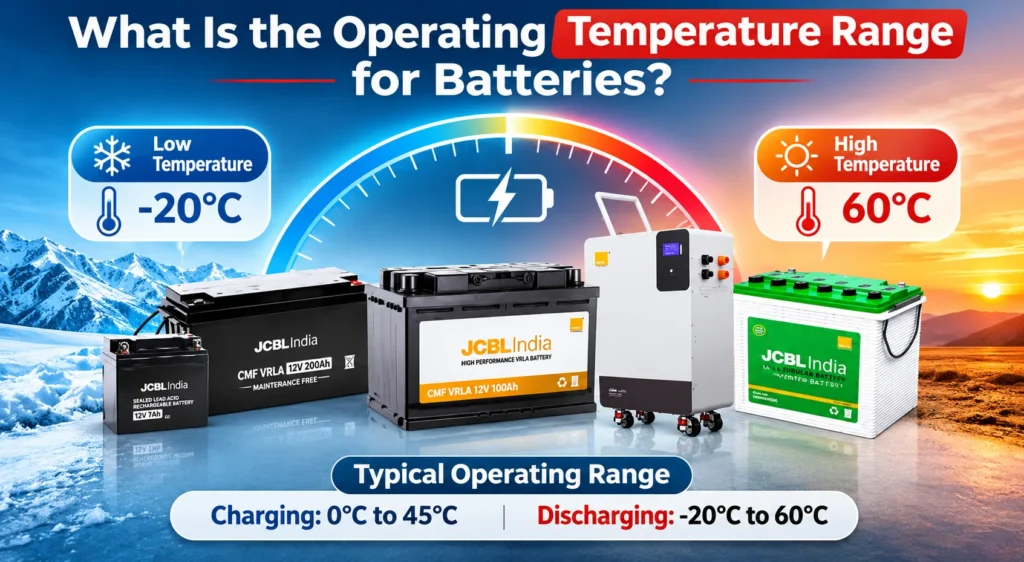
The operating temperature range for batteries refers to the minimum and maximum temperatures at which a battery can safely charge or discharge while maintaining its expected performance. This range varies depending on battery chemistry, design, and manufacturer specifications. For example, lithium-ion batteries typically discharge between -20°C and 60°C, while their charging range is commonly 0°C to 45°C. Lead-acid batteries have different temperature limits depending on their construction and model. Operating a battery outside its recommended temperature range can reduce efficiency, accelerate aging, and increase safety risks.
What Is the Normal Operating Temperature Range for Batteries?
There is no universal operating temperature range for all batteries. Different battery chemistries respond differently to heat and cold, so their charging and discharging limits also vary.
The following table provides indicative temperature ranges for commonly used battery types.
| Battery chemistry | Charging temperature | Discharging temperature |
|---|---|---|
| Lithium-ion | 0°C to 45°C | -20°C to 60°C |
| Lead-acid | Approximately 0°C to 50°C | Approximately -20°C to 50°C |
| Nickel-cadmium (NiCd) | Model-dependent | Model-dependent |
| Nickel-metal hydride (NiMH) | Model-dependent | Model-dependent |
Note: These figures are general reference ranges, not guaranteed operating specifications. Actual limits depend on cell chemistry, construction, configuration, and manufacturer recommendations.
For industrial applications, battery manufacturers provide specific operating limits in their technical datasheets. These specifications should always take priority over general temperature guidelines.
What Is the Ideal Operating Temperature for Batteries?
The ideal operating temperature for batteries is the temperature at which they deliver reliable performance without experiencing excessive chemical or thermal stress.
For many lithium-ion batteries, moderate temperatures around 15°C to 35°C are generally favorable for operation. However, the optimum range can differ between battery chemistries and applications.
Temperature affects battery performance in several ways:
- Moderate temperatures: Support normal electrochemical reactions and efficient energy delivery.
- Low temperatures: Slow down electrochemical reactions, increasing internal resistance and reducing available capacity.
- High temperatures: Accelerate chemical degradation, increase self-discharge, and shorten battery service life.
Maintaining a suitable operating temperature helps improve battery reliability and supports consistent performance over time.
How Does Temperature Affect Battery Performance?
Temperature influences the chemical reactions inside a battery. Both extremely low and high temperatures can affect its ability to store and deliver energy.
1. Effects of Low Temperatures on Batteries
Low temperatures slow down electrochemical reactions and reduce the movement of ions within battery cells. This can result in:
- Reduced available capacity: Batteries may deliver less usable energy in cold conditions.
- Increased internal resistance: Higher resistance can reduce voltage and power output.
- Slower charging: Charging takes longer as the battery’s ability to accept current decreases.
- Lithium plating risk: Charging conventional lithium-ion batteries below 0°C can cause metallic lithium to deposit on the anode, potentially damaging the cell and creating safety risks.
For applications operating in cold environments, battery systems may require temperature-controlled charging or preheating before use.
2. Effects of High Temperatures on Batteries
Excessive heat can accelerate unwanted chemical reactions inside battery cells. Prolonged exposure to high temperatures may cause:
- Faster capacity degradation.
- Increased self-discharge.
- Shorter battery service life.
- Electrolyte and electrode degradation.
- Greater risk of thermal instability in lithium-ion battery systems.
For lead-acid batteries, high temperatures can also accelerate corrosion and water loss, particularly when charging voltage is not adjusted appropriately.
What Is the Difference Between Battery Charging, Discharging, and Storage Temperature?
Battery charging and discharging, and storage temperatures refer to three different operating conditions. Manufacturers specify separate limits because a battery responds differently to temperature depending on what it is doing.
| Temperature condition | Meaning |
|---|---|
| Charging temperature | Permissible temperature range while electrical energy is being stored in the battery. |
| Discharging temperature | Permissible temperature range while the battery supplies electrical energy to a connected load. |
| Storage temperature | Recommended temperature range when the battery is not in active use. |
For example, a conventional lithium-ion battery may discharge at temperatures below 0°C, but charging at freezing temperatures is generally restricted because of the risk of lithium plating.
Storage requirements also depend on battery chemistry, storage duration, and state of charge. Therefore, battery storage temperature should always be checked separately from its operating limits.
How Can You Maintain the Recommended Operating Temperature of Batteries?
Maintaining suitable battery temperatures requires appropriate installation, monitoring, and thermal management. The following practices can help:
- Ensure proper ventilation: Install battery systems in locations with adequate airflow to prevent excessive heat accumulation.
- Use thermal management systems: Heating or cooling systems can help maintain suitable temperatures in applications exposed to extreme environmental conditions.
- Monitor battery temperature: Use temperature sensors and battery management systems (BMS) to track cell temperatures and identify abnormal conditions.
- Follow charging limits: Use compatible chargers that regulate current and voltage according to battery temperature.
- Avoid direct heat exposure: Keep batteries away from direct sunlight, heating equipment, and other sources of excessive heat.
- Follow storage guidelines: Maintain the recommended storage temperature and state of charge when batteries are not in use.
For large battery installations, thermal management should be considered during system design rather than treated as an after-installation requirement.
Why Is Operating Temperature Important When Selecting Batteries for Industrial Applications?
For industrial applications, battery temperature compatibility directly influences system reliability, maintenance requirements, and expected service life.
Businesses should evaluate the following factors before selecting a battery:
- Environmental conditions: Check the minimum and maximum ambient temperatures at the installation site.
- Application requirements: Consider whether the battery will operate continuously, experience frequent charging cycles, or supply high discharge currents.
- Thermal management: Determine whether the installation requires active heating, cooling, or temperature monitoring.
- Battery specifications: Review the manufacturer’s charging, discharging, and storage temperature limits.
- Expected service life: Consider how the operating environment may affect battery degradation and maintenance intervals.
These factors are particularly important for electric vehicles, solar energy storage systems, UPS installations, telecommunications infrastructure, and industrial equipment.
For businesses in India, regional climate conditions also deserve consideration. Battery installations exposed to high summer temperatures, particularly in outdoor or poorly ventilated environments, may require additional ventilation and thermal management.
Choosing a battery based only on capacity or voltage can overlook these operating requirements. Temperature compatibility should be part of the battery selection and system design process.
Conclusion
Understanding the operating temperature range for batteries is essential for maintaining performance, safety, and service life. Since charging, discharging, and storage limits vary by battery chemistry, selecting a battery that matches the application’s environmental conditions is critical. For industrial applications, following manufacturer specifications and implementing appropriate thermal management can help reduce premature degradation, improve reliability, and ensure consistent battery performance.
FAQs
1. What is the normal operating temperature range for batteries?
The operating temperature range depends on battery chemistry. Conventional lithium-ion batteries typically discharge between -20°C and 60°C, while lead-acid batteries commonly operate between -20°C and 50°C. Always verify the limits in the manufacturer’s datasheet.
2. What is the ideal temperature for battery performance?
For most commercial lithium-ion batteries, 15°C to 35°C is generally considered a favorable operating range. Maintaining moderate temperatures helps support performance and reduce temperature-related degradation.
3. Can batteries operate in extremely cold temperatures?
Yes, some batteries can discharge in sub-zero conditions. However, cold temperatures reduce available capacity and increase internal resistance. Charging restrictions also apply, particularly to conventional lithium-ion batteries.
4. What happens when a battery gets too hot?
Excessive heat accelerates internal chemical degradation, increases self-discharge, and reduces battery lifespan. In lithium-ion batteries, severe thermal stress can also increase the risk of thermal runaway.
5. Does temperature affect battery lifespan?
Yes. Prolonged exposure to high temperatures accelerates battery aging, while repeated operation in extreme cold can affect performance and charging behaviour. Maintaining manufacturer-recommended temperatures helps preserve battery life.
6. Can lithium-ion batteries be charged below 0°C?
Most conventional lithium-ion batteries should not be charged below 0°C because lithium plating can occur on the anode. Specialized cells may support low-temperature charging under controlled conditions, but manufacturer approval is essential.
7. What is the difference between battery operating and storage temperature?
Operating temperature refers to the permissible temperature during charging or discharging. Storage temperature applies when the battery is not in active use. Manufacturers specify separate limits for these conditions.
8. How can battery temperature be controlled in industrial applications?
Industrial battery temperatures can be managed through proper ventilation, temperature sensors, battery management systems, and active heating or cooling solutions. The appropriate method depends on battery chemistry, installation size, and environmental conditions.