

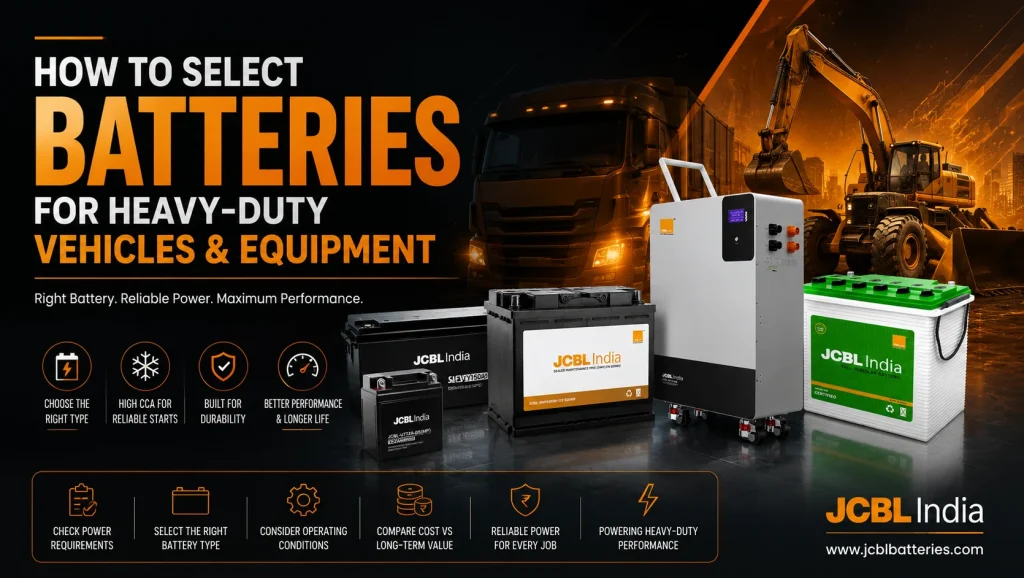
Choosing the right battery for heavy-duty vehicles and equipment is important for keeping operations running smoothly. Whether it is a commercial truck, construction machine, mining equipment, or agricultural vehicle, the battery must provide reliable starting power and handle tough working conditions.
The best battery for heavy-duty equipment depends on the vehicle’s power needs, operating environment, battery type, and performance requirements. Businesses should check factors like Cold Cranking Amps (CCA), reserve capacity, durability, and maintenance needs before selecting a battery.
Using the wrong battery can lead to starting problems, equipment downtime, and higher maintenance costs.
Check the Power Requirements of Heavy-Duty Equipment
Before choosing a battery, always check the manufacturer’s recommendations. Heavy-duty vehicles and machines are designed to work with specific battery sizes and power ratings.
Important things to check include:
- Battery voltage
- Battery size (group size)
- Cold Cranking Amps (CCA)
- Reserve Capacity (RC)
Using a battery with the wrong specifications can affect performance and damage the charging system.
For example:
- A commercial truck may need a high-CCA battery for reliable cold starts.
- Construction equipment may need a vibration-resistant battery.
- Equipment with extra electrical systems may need a higher reserve capacity.
Following OEM specifications helps ensure safe and reliable performance.
Choose the Right Battery Type for Heavy-Duty Vehicles
Different battery types are designed for different operating conditions and power requirements. Choosing the right battery type helps improve equipment reliability, reduce downtime, and extend battery life.
Flooded Lead-Acid Batteries
Flooded lead-acid batteries are best for standard commercial vehicles and fleets looking for a cost-effective battery solution for moderate-duty applications.
These batteries are widely used because they are affordable and easily available. However, they require regular maintenance and are less suitable for high-vibration environments.
Why Choose Flooded Lead-Acid Batteries?
- Lower upfront cost
- Suitable for standard truck operations
- Easily available for replacement
Things to Consider
- Require periodic maintenance
- Lower vibration resistance
- Shorter lifespan in demanding environments
AGM Batteries (Absorbent Glass Mat)
AGM batteries are best for heavy-duty equipment operating in rough environments where vibration resistance, reliability, and maintenance-free performance are important.
AGM batteries are commonly used in construction equipment, mining machinery, and off-road vehicles because they offer better durability and faster charging than standard lead-acid batteries.
Why Choose AGM Batteries?
- Maintenance-free design
- Excellent vibration resistance
- Faster charging capability
- Better performance in harsh conditions
Things to Consider
- Higher upfront cost than flooded batteries
- May require compatible charging systems
Lithium-Ion Batteries
Lithium-ion batteries are best for high-performance industrial equipment and advanced fleet operations that require fast charging, lightweight batteries, and longer service life.
Although lithium batteries have a higher upfront cost, they offer improved efficiency and lower long-term maintenance requirements.
Why Choose Lithium-Ion Batteries?
- Lightweight and compact
- Long operational lifespan
- Fast charging performance
- Lower long-term operating costs
Things to Consider
- Higher initial investment
- Not necessary for all standard heavy-duty applications
Select the Right CCA Rating for Heavy-Duty Batteries
Cold Cranking Amps (CCA) measure how well a battery can start an engine in cold temperatures.
Heavy-duty diesel engines need higher CCA because they require more power to start.
| Equipment Type | Recommended CCA |
| Commercial trucks | 650–950 CCA |
| Construction equipment | 750–1150 CCA |
| Mining equipment | 1000+ CCA |
A battery with low CCA may cause:
- Slow engine starting
- Starting failure in winter
- Extra stress on the starter and alternator
For colder climates, high-CCA AGM batteries are often preferred.
Understand Reserve Capacity in Heavy-Duty Batteries
Reserve Capacity shows how long a battery can provide power if the alternator stops working.
This is important for vehicles and equipment that use:
- GPS systems
- Refrigeration units
- Hydraulic systems
- Extra lighting
- Telematics systems
Higher reserve capacity helps keep systems running during power interruptions or long idle periods.
How Operating Conditions Affect Battery Performance
Heavy-duty equipment often works in harsh conditions, so the battery should match the environment.
High Vibration
Construction and mining equipment create constant vibration that can damage standard batteries. AGM batteries are better suited for these environments because they are more durable.
Extreme Temperatures
Cold weather reduces battery performance, while excessive heat can shorten battery life.
Long Idle Time
Vehicles that stay idle for long periods need batteries with strong reserve capacity and good charge retention.
Choosing a battery designed for the operating environment improves reliability and battery lifespan.
Compare Battery Cost vs Long-Term Value
Many businesses choose the cheapest battery, but lower-cost batteries may wear out faster and require more maintenance.
When comparing batteries, consider:
- Lifespan
- Maintenance needs
- Reliability
- Warranty
- Downtime costs
In many heavy-duty applications, a higher-quality battery can reduce replacement frequency and improve operational efficiency.
Choose a Reliable Heavy-Duty Battery Supplier
Battery quality is just as important as battery type.
A reliable Battery supplier should offer the following:
- OEM-compliant products
- Warranty support
- Technical guidance
- Consistent product quality
For commercial fleets and industrial operations, supplier reliability helps reduce unexpected failures and downtime.
Common Mistakes to Avoid When Selecting Heavy-Duty Batteries
Avoid these common battery selection mistakes:
- Ignoring OEM specifications
- Choosing based only on price
- Selecting the wrong CCA rating
- Using the wrong battery size
- Ignoring operating conditions
Choosing the correct battery helps improve equipment reliability and reduce maintenance problems.
Conclusion
Selecting the right battery for heavy-duty vehicles and equipment helps improve performance, reduce downtime, and lower maintenance costs.
Before buying a battery, businesses should evaluate:
- Equipment requirements
- Battery type
- CCA rating
- Reserve capacity
- Operating environment
- Supplier reliability
For fleet operators, construction companies, mining operations, and industrial businesses, the right battery is a long-term investment in reliable and efficient operations.
FAQs
AGM batteries are best for most heavy-duty vehicles and equipment because they offer better vibration resistance, maintenance-free performance, and longer lifespan than standard lead-acid batteries.
Choose the battery size based on the OEM specifications, including voltage, battery group size, CCA rating, and reserve capacity requirements.
CCA is important because it measures a battery’s ability to start heavy-duty engines in cold temperatures. Higher CCA ratings provide better starting performance.
Yes. AGM batteries are better for heavy equipment operating in rough conditions because they provide improved durability, faster charging, and better vibration resistance.
Heavy-duty vehicle batteries typically last 3 to 6 years, depending on battery type, operating conditions, and maintenance practices.