

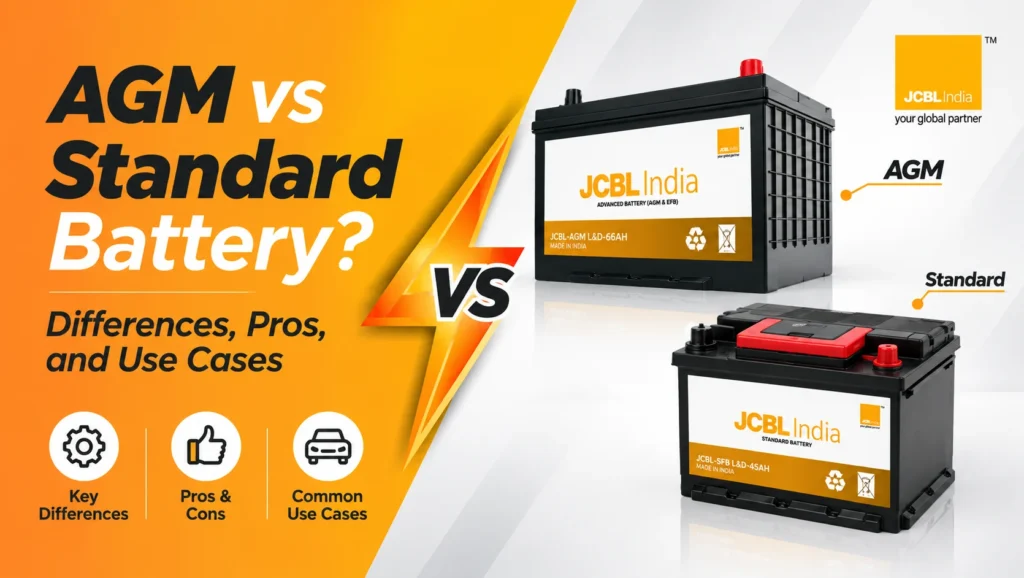
Choosing the right car battery is critical for vehicle performance, reliability, and your long-term operating costs. While both AGM and standard batteries perform the same basic job—storing electrical energy and starting the engine—their internal design, chemistry, and performance characteristics are completely different.
Many vehicle owners ask whether upgrading to an AGM battery vs standard options is worth the higher price tag, or if a regular battery is more than enough for their daily commute. The answer depends heavily on your vehicle’s specific electrical requirements, your climate, and manufacturer recommendations.
This guide provides a direct, head-to-head breakdown of the difference between agm and standard battery tech, helping you make the smartest choice for your vehicle.
In this guide, you’ll learn:
- The key differences between AGM and standard batteries.
- Lifespan differences under everyday driving conditions.
- Essential charging guidelines to prevent battery damage.
- How to easily identify whether your battery is an AGM or standard model.
- The structural variations between modern AGM and SMF battery types.
AGM batteries are sealed, low-maintenance powerhouses that charge faster, last longer, and handle heavy electrical loads easily. Standard flooded batteries (regular batteries) are conventional options that offer a lower upfront cost but require basic inspections and wear out faster under heavy tech loads. For modern cars with start-stop tech, AGM is practically mandatory.
Key Takeaways for Quick Reference
- Electrolyte Storage: AGM batteries trap acid inside compressed fiberglass mats, while regular batteries contain free-flowing liquid acid.
- Lifespan Difference: An AGM battery typically lasts 4 to 7 years, whereas a normal standard battery drops after 3 to 5 years.
- Start-Stop Ready: Standard batteries will fail prematurely if used in a modern vehicle with automatic engine start-stop features.
- Charging Tolerance: AGM batteries demand precise voltage control and require an AGM-specific smart charger to avoid permanent internal heat damage.
What Is the Difference Between AGM and Standard Batteries?
When people ask what is the difference between agm and standard battery models, they are talking about how the battery handles its internal chemistry.
- Standard Flooded Batteries: This is your traditional regular vs agm battery option. It contains liquid sulfuric acid that flows freely inside the plastic casing around lead plates. Because it vents gases during heavy use, some regular designs still feature removable caps to check and top off fluid levels.
- AGM (Absorbent Glass Mat) Batteries: In this advanced layout, the liquid acid is 100% absorbed into fine fiberglass cushioning mats tightly packed between the plates. There is no loose liquid inside, making the unit completely spill-proof, vibration-resistant, and maintenance-free. If you want a detailed look at how this engineering works behind the scenes, read our definitive analysis on AGM Battery Meaning, Uses & Benefits.
AGM vs Standard Battery Comparison Table
To see how these two designs stack up in everyday use, look at this quick performance matrix:
| Feature | Advanced AGM Battery | Standard Flooded (Regular) Battery |
| Internal Design | Absorbed Fiberglass Mat | Free-Flowing Liquid Acid |
| Maintenance | Maintenance-Free | May Require Periodic Inspection |
| Average Lifespan | 4 to 7 Years | 3 to 5 Years |
| Vibration Resistance | Superior / Heavy Duty | Moderate |
| Charging Speed | Generally faster charge acceptance | Standard slower rate |
| Start-Stop Tech | Fully Compatible | Not Recommended |
| Upfront Cost | Higher Initial Investment | Budget-Friendly |
AGM vs STD Battery: Is There Any Difference?
In automotive battery terminology, STD stands for a standard flooded lead-acid battery. Therefore, AGM vs STD battery and AGM vs standard battery generally refer to the same comparison. AGM batteries offer longer lifespan, better cycling performance, and improved support for modern electrical systems, while STD batteries are typically more affordable and suitable for conventional vehicles.
AGM Battery vs Standard Life: Which Lasts Longer?
When comparing agm battery vs standard life expectations, AGM is the clear winner. Under normal driving conditions, an AGM battery typically delivers 4 to 7 years of service, while a traditional standard battery generally drops in capacity after 3 to 5 years. To better understand these long-term wear patterns, you can check our comprehensive tracking data on AGM Battery Lifespan performance thresholds.
AGM batteries hold up longer because their tightly packed internal mats prevent the lead plates from shedding active chemical material over time. They are also highly immune to severe physical vibrations, which is a leading cause of internal shorts in regular batteries.
Real-World Example: The Local Taxi Fleet
Think of a city taxi driver who makes dozens of short stops every single day, leaving the headlights and radio running while waiting for passengers. A regular battery operating under this type of constant draining stress will likely fail within 18 to 24 months. An AGM battery, however, can handle thousands of these micro-cycling drops effortlessly, outlasting the standard battery by several years under the exact same conditions.
AGM vs Standard Battery: Which Is Better in Hot and Cold Weather?
Weather extremes play a massive role in real-world battery behavior, and this is where the premium structural layout of an AGM battery creates a huge performance gap over standard lead-acid units:
- In Extreme Cold: Freezing temperatures drastically slow down battery chemical reactions and thicken engine oil, requiring massive power to turn over the motor. Standard batteries can lose a large chunk of their cranking power in freezing weather, and if they are undercharged, their liquid electrolyte can actually freeze and crack the casing. AGM batteries maintain low internal resistance and tight plate connections, delivering excellent cold-cranking performance and absolute freeze protection.
- In Extreme Heat: High ambient heat accelerates internal corrosion and fluid evaporation in conventional flooded batteries, making heat waves the number one killer of regular units. While AGM batteries are also susceptible to extreme heat damage if overcharged, their sealed valve-regulated design dramatically limits internal fluid loss, giving them a much stronger survival rate during scorching summer seasons.
AGM vs Standard Battery Charging
Understanding agm vs standard battery charging requirements is the most critical factor in protecting your battery investment. More AGM batteries fail because of charging mistakes than because of age.
- AGM Battery Charging: Because AGM batteries are completely sealed, they are highly sensitive to excessive charging voltage. If you use an old, non-regulated manual charger, it can create internal heat buildup and pressure, causing safety valves to vent critical moisture that can never be replaced. AGM units require a smart charger with a dedicated AGM mode that targets a tight range between 14.2V and 14.7V. For a complete step-by-step voltage mapping, refer to our standard AGM Battery Charging Guide.
- Standard Battery Charging: Regular batteries are much more forgiving. They can handle minor charging voltage variations and slower charging gear without destroying their internal liquid components.
Are AGM Batteries Better Than Standard Regular Batteries?
Why are AGM batteries better than standard batteries?
Are agm batteries better? For modern vehicles, absolutely. AGM batteries are better because they offer faster charge acceptance, longer lifespans, superior resistance to road vibrations, and zero risk of acid leaks. They maintain flat voltage stability under heavy load, ensuring that advanced car electronics, safety sensors, and climate accessories run smoothly without sudden power dips.
Pros and Cons of AGM Batteries
- The Pros: Maintenance-free design, excellent deep-cycle recovery, extreme cold-weather cranking performance, and complete compatibility with start-stop engines.
- The Cons: Higher initial purchase price and strict requirement for specialized smart charging equipment.
Proper maintenance and charging habits can significantly extend AGM battery life. Learn more in our AGM Battery Maintenance Checklist.
AGM or Standard Battery: Which One Should You Choose?
When deciding on a car battery agm or std layout, the best choice depends on your vehicle’s factory setup and daily electrical load. You do not always need to pay a premium for AGM technology if your car has basic electronics.
You should choose a standard or agm battery based on these practical conditions:
- Choose a Standard Regular Battery if: You drive a conventional vehicle without automatic engine features, your climate is mild, and minimizing upfront costs is your primary goal. Standard batteries remain a highly cost-effective, proven choice for older or basic models.
- Choose an AGM Battery if: Your car has factory start-stop features, you live in extreme hot or cold weather zones, or you run high-draw aftermarket accessories like winches, premium sound systems, or plow arrays. Additionally, if you prioritize maximum reliability and want a low-maintenance battery that outlasts regular lead-acid models under heavy cycle loads, AGM is worth the extra investment.
How to Tell If a Battery Is AGM or Standard
If you are replacing an old battery or working on a used car, figuring out is my battery agm or std is vital before connecting jumper cables or a garage charger.
AGM vs standard battery how to tell
To find out if a car battery is AGM or standard, look closely at the manufacturer label on the top or side casing. An AGM battery will clearly display keywords such as AGM, Absorbent Glass Mat, Sealed Valve-Regulated, or VRLA. Additionally, if the battery casing is completely sealed with a flat top and has no removable plastic caps for adding water, it is highly likely an AGM unit.
If the labels are missing, check your vehicle owner’s manual—especially if your car has factory automatic start-stop features, which almost universally require an AGM upgrade.
AGM vs SMF Battery: Clearing Up the Confusion
Many buyers look at an SMF (Sealed Maintenance-Free) battery and assume it’s an AGM battery because it doesn’t have water caps. This is a common misunderstanding.
- SMF Battery: This is simply a regular standard battery that is permanently sealed at the factory. It still contains free-flowing liquid acid inside, it just doesn’t require you to top off fluid levels. It offers standard charging speeds and normal lifespans.
- AGM Battery: This is an entirely different tier of technology. The acid is fully trapped in glass mats, offering superior cycling durability, faster charge acceptance, and heavy-duty performance that an SMF battery cannot match.
Conclusion
The difference between AGM and standard batteries comes down to design, performance, and application requirements. Standard batteries remain a practical and affordable solution for conventional vehicles, while AGM batteries provide superior charging efficiency, longer lifespan, better vibration resistance, and stronger support for modern electrical systems.
Choosing the right battery type and following proper charging practices are two of the most important factors for maximizing battery performance, reliability, and service life. As a battery manufacturer and supplier, JCBL India Batteries recommends selecting a battery that matches the vehicle manufacturer’s specifications and intended application.
FAQs
The main difference is the internal construction. AGM batteries hold their electrolyte acid inside absorbed fiberglass mats, while standard batteries use free-flowing liquid acid. This allows AGM batteries to be completely sealed, leak-proof, and highly vibration-resistant.
In most cases, yes. Upgrading to an AGM battery provides better performance and longer life. However, you should ensure your vehicle’s charging system is compatible with AGM voltage limits and check your manufacturer instructions.
No. If your vehicle came from the factory with an AGM battery (especially start-stop vehicles), installing a standard regular battery will cause it to wear out rapidly, often failing within a few months due to the high electrical cycling stress.
No. AGM batteries are highly sensitive to overcharging and require a smart charger with an explicit “AGM” setting to properly regulate voltage stages and protect the sealed cells.
On average, a well-maintained AGM battery will last between 4 and 7 years, whereas a conventional standard regular battery typically needs replacement after 3 to 5 years of operation.
AGM stands for Absorbent Glass Mat. It refers to a battery design that uses fiberglass mats to hold the electrolyte, making the battery sealed, spill-resistant, and maintenance-free.